
Interactive Installation Malaysia: Design, Technology & Applications
An interactive installation turns a physical space into an experience that responds to visitors. Instead of simply watching a screen or viewing a static display, people can touch, move, scan, play, explore or trigger digital content through their actions.
In Malaysia, interactive installations are increasingly used for corporate events, exhibitions, visitor centres, museums, showrooms, shopping malls, property galleries and brand activations.
The technology can range from a simple touchscreen experience to a larger installation combining sensors, displays, projection, physical objects and custom software.
At MyDigital Asia, we approach interactive installation projects from the experience first: what should visitors see, understand or do? The appropriate hardware and technology can then be selected around that objective.
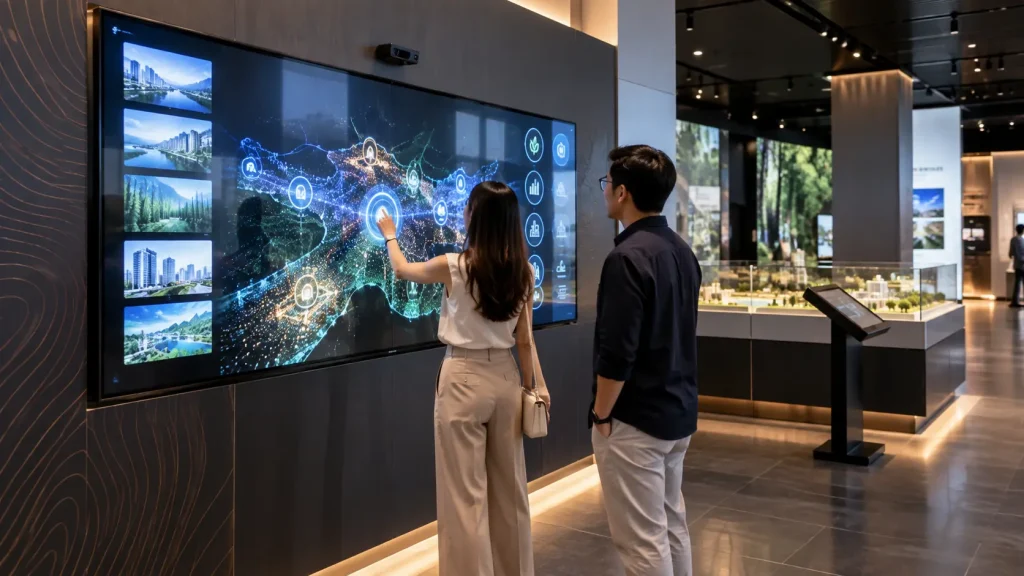
Interactive Installation at a Glance
| Project Question | Typical Options |
|---|---|
| How can visitors interact? | Touch, body movement, gestures, QR, buttons, objects or sensors |
| Where can it be used? | Events, exhibitions, museums, visitor centres, showrooms, malls and public spaces |
| What can display the content? | Touchscreens, LED displays, projection, monitors or multi-screen installations |
| Can it be customised? | Yes. Interface, interaction logic, graphics, animation and content can be designed around the project |
| Temporary or permanent? | Both are possible, but the hardware, construction and operating requirements differ |
What Is an Interactive Installation?
An interactive installation is a physical-digital system that responds to a visitor’s input or behaviour.
A conventional digital display normally follows a one-way flow:
Screen → Content → Viewer
An interactive installation adds a response:
Visitor → Input → System → Digital Response → Visitor
The input might be a finger touching a screen, a person walking into a detection zone, a hand gesture, a physical button, a scanned QR code or an object placed in a specific position.
The system interprets that input and triggers a corresponding experience such as animation, information, a game, product content, sound or a change in the surrounding environment.
This is why interactive installation design is not simply about choosing a display. The display is only one component of the overall experience.
Where Are Interactive Installations Used?
The right application depends on what the organisation wants visitors to accomplish. Some projects are designed to attract attention, while others need to explain complex information, encourage exploration or create a memorable experience.
Corporate Events and Brand Activations
Interactive technology can turn attendees from spectators into participants. Applications may include digital games, interactive product displays, audience activities, photo experiences and sensor-triggered content.
For event-specific technologies, see our guide to interactive event technology in Malaysia.
Exhibitions and Trade Shows
Exhibition booths have limited space and limited time to capture attention. An interactive installation can allow visitors to explore products, technical information or brand content without filling the booth with static panels.
Depending on the objective, this could involve a touchscreen product explorer, interactive game, physical product with digital information, sensor-based activation or a larger visual experience.
Visitor Centres and Experience Centres
Visitor centres often need to communicate a large amount of information without making the space feel like a conventional information gallery.
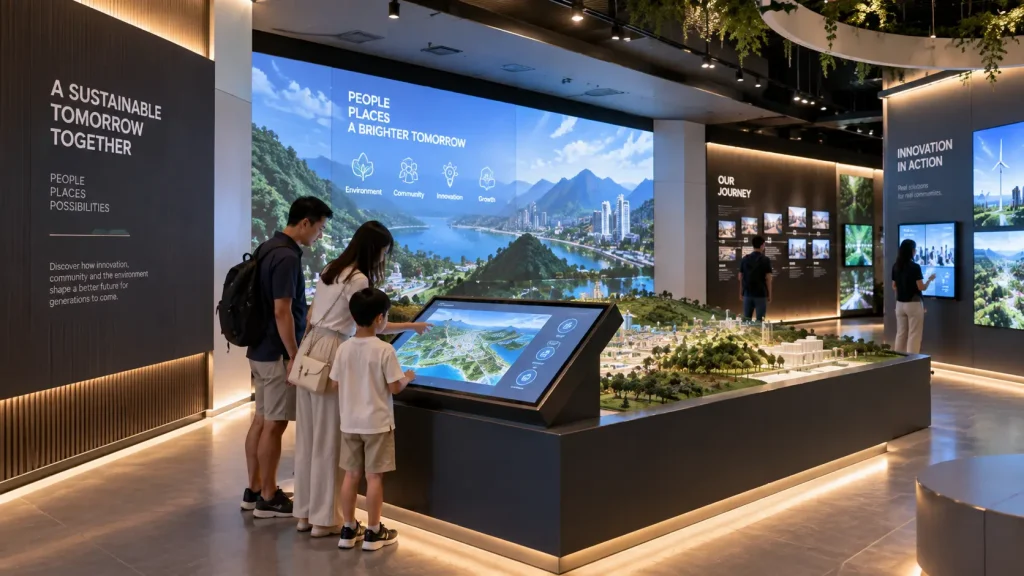
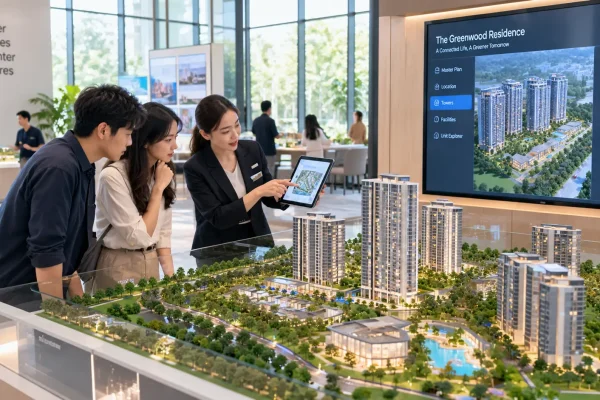
Interactive maps, timelines, touch displays, physical models, projection and sensor-triggered media can divide information into experiences that visitors explore at their own pace.
This will be covered in more detail in our visitor centre interactive installation guide.
Museums and Galleries
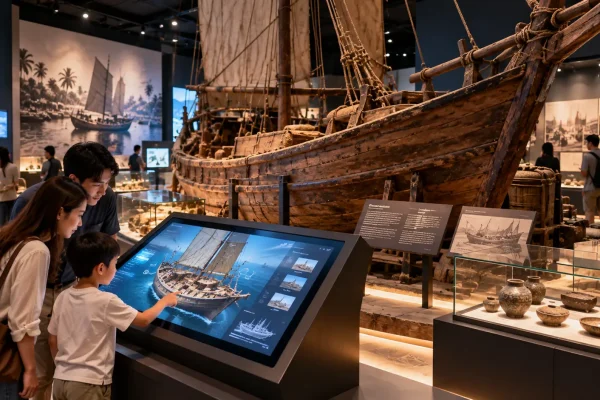
Interactive installations can complement physical exhibits by revealing additional information, visualising processes or allowing visitors to engage with content that cannot be demonstrated through a static object alone.
The design should support the exhibit rather than allowing the technology to become the main distraction.
Corporate Showrooms
Companies with complex products can use interactive installations to explain specifications, processes, product variants or systems that are difficult to demonstrate physically.
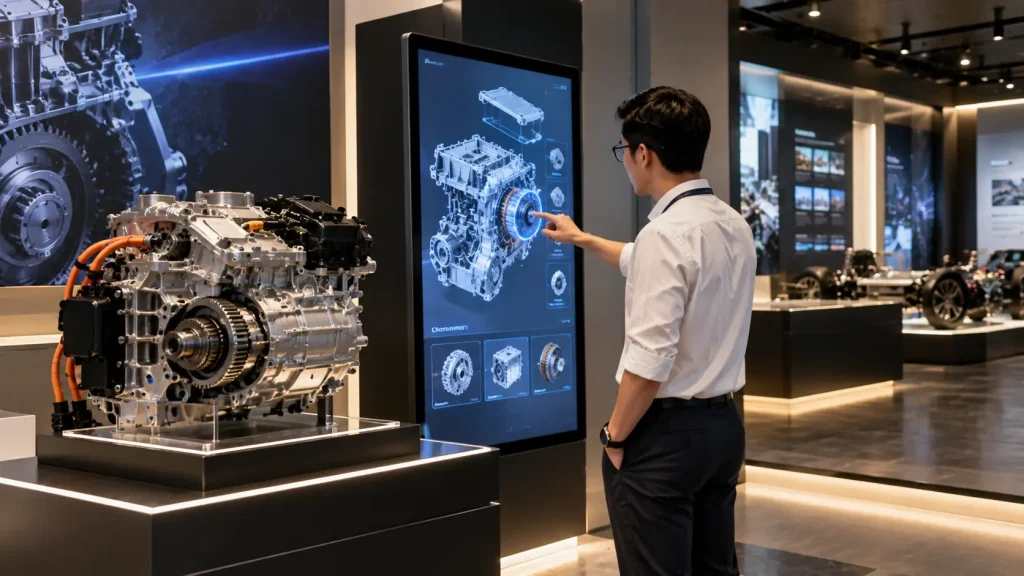
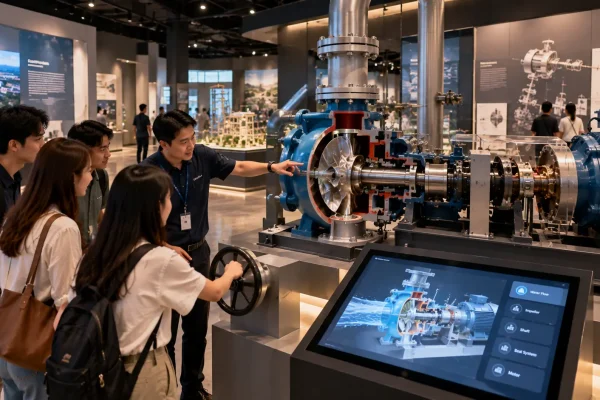
For example, a physical machine or product can remain the centrepiece while a nearby interactive display allows visitors to explore internal components, animations or technical information.
Shopping Malls and Public Spaces
In high-traffic spaces, the interaction usually needs to be immediately understandable. Visitors should not require lengthy instructions before participating.
Motion-triggered visuals, simple games, interactive walls and branded experiences can work well when the objective is engagement rather than detailed information delivery.
What Technologies Can Be Used?
There is no single piece of equipment called an “interactive installation system”. Most projects combine several technologies according to the required experience.
Touchscreens
Touchscreens are useful when visitors need precise control over menus, maps, product information, media or configurable content.
They are particularly suitable for information-heavy experiences because the interaction is already familiar to most users.
For touchscreen-specific planning, see interactive touchscreen solutions in Malaysia.
Motion and Gesture Sensors
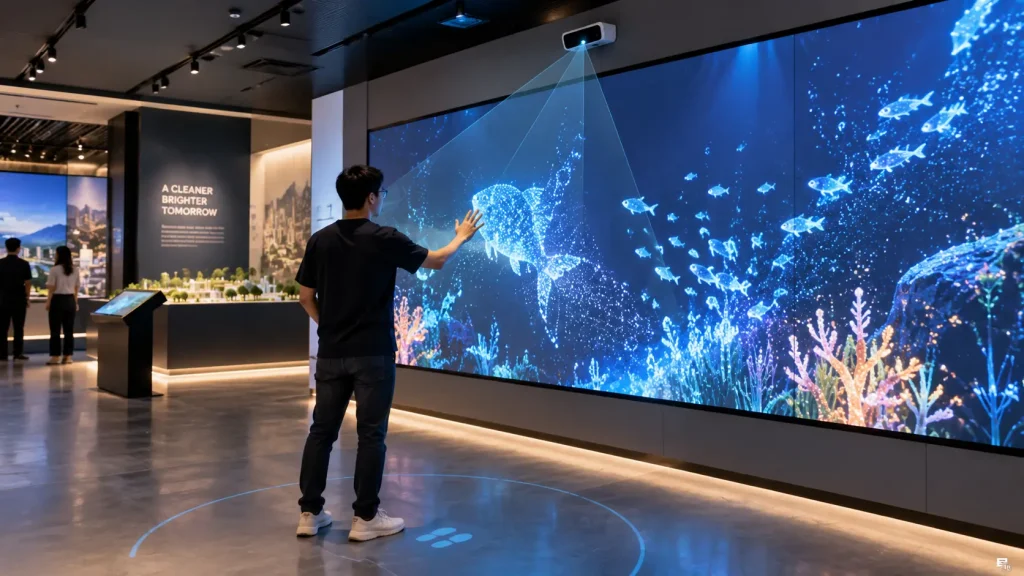
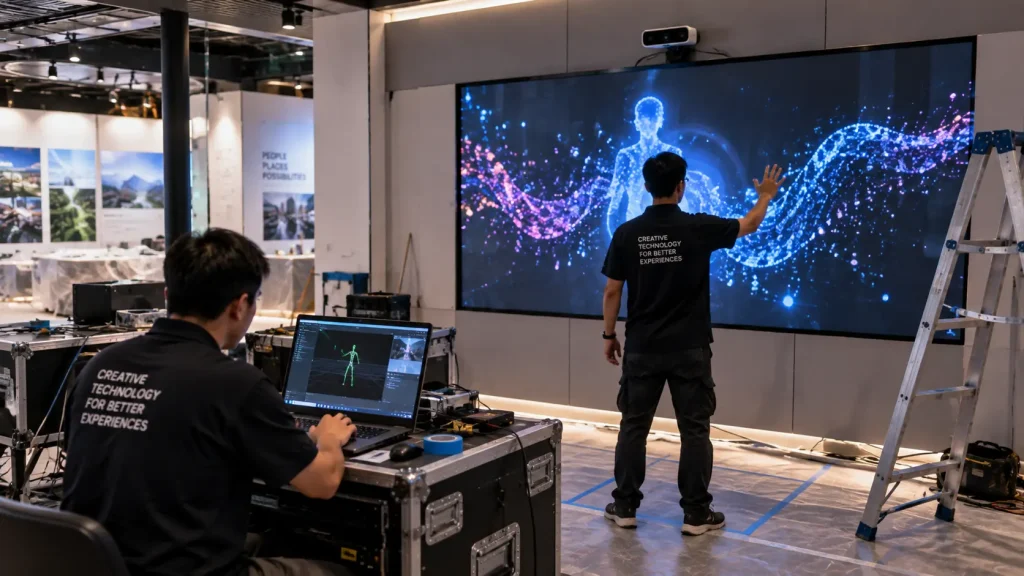
Depth cameras, motion sensors and other tracking technologies can detect visitors without requiring them to touch a screen.
These systems can be used for interactive walls, movement-based games, reactive content and installations where the visitor’s body becomes the controller.
Sensor selection depends on factors such as detection area, viewing distance, number of users, lighting conditions and the type of movement that needs to be recognised.
Projection
Projection can transform larger physical surfaces into digital canvases. When combined with tracking or sensors, projected content can also respond to visitor movement.
The projection surface, ambient light, throw distance and projector position must be evaluated before deciding whether projection is suitable.
For projects focused specifically on mapped visual content, refer to our projection mapping Malaysia guide.
Interactive Games
Game mechanics can be integrated when the objective is participation, competition, lead generation or entertainment.
The interaction might use a touchscreen, mobile phone, physical button, motion sensor or another input device depending on the event and audience.
See our interactive games Malaysia guide for game-focused applications.
QR and Mobile Interaction
A visitor’s own smartphone can become part of the installation. QR-based interactions can reduce the amount of dedicated hardware required and can also connect the physical experience with registration, lead collection or personalised content.
Physical Objects and Sensors
Digital interaction does not always need to begin on a screen.
Buttons, switches, RFID or NFC tags, physical products and other objects can be integrated into an installation so that a real-world action triggers digital content.
This approach can be especially useful for product demonstrations and educational installations where visitors should interact with something tangible.
How an Interactive Installation Works
Most installations can be understood as four connected layers:
- Input — the visitor performs an action.
- Detection — a touchscreen, sensor, scanner or other device detects that action.
- System Logic — software interprets the input and determines what should happen.
- Output — the installation responds through visuals, animation, sound, lighting or another physical-digital effect.
For example, an exhibition visitor might approach a physical product and select one of its components on a touchscreen. The software identifies the selection and displays a 3D animation explaining how that component works.
In a movement-based installation, the visitor may simply walk into the active area. A depth sensor detects the person’s position, the software tracks the movement, and the projected or displayed content reacts in real time.
The important point is that these components need to be designed as one system. Choosing the display, sensor and software separately without considering the complete interaction can create an experience that is technically functional but difficult for visitors to use.
Choosing the Right Interaction for the Experience
The most advanced technology is not automatically the best option. A successful installation uses the simplest interaction that can deliver the intended experience reliably.
| Requirement | Interaction Worth Considering |
|---|---|
| Visitors need to browse detailed information | Touchscreen |
| Visitors should interact from a distance | Motion or gesture tracking |
| Large groups need to see the experience | Large display, LED or projection with suitable interaction |
| The experience needs competition or entertainment | Interactive game |
| Visitors use their own phones | QR or web-based interaction |
| A physical product should trigger digital content | Sensor, RFID/NFC or physical control integration |
The decision should also consider who will use the installation. An experience designed for children, for example, may need larger interaction zones and simpler instructions than a technical product explorer designed for engineers or corporate buyers.
Similarly, a three-day exhibition installation can prioritise rapid setup and portability, while a permanent visitor centre installation needs to consider durability, maintenance, startup procedures and long-term content management.
Technical Requirements to Consider
Before an interactive installation can be properly designed, the physical environment needs to be understood. This is especially important for installations involving projection, sensors, large displays or permanent integration.
Typical information required includes:
- Available installation area and dimensions
- Photos, videos, drawings or floor plans of the space
- Ceiling height and mounting possibilities
- Power and network availability
- Ambient lighting conditions
- Expected viewing and interaction distance
- Estimated number of simultaneous users
- Indoor or outdoor environment
- Temporary or permanent installation period
- Existing screens, projectors, computers or other hardware that may be reused
A site survey may be required for more complex installations. This allows projector positions, sensor coverage, mounting points, cable routes and visitor movement to be evaluated before the final system is confirmed.
Can Existing Hardware Be Used?
Sometimes. Existing displays, projectors, computers or other equipment can potentially be integrated, but compatibility should be checked rather than assumed.
For example, an existing projector may provide sufficient brightness but have the wrong lens or throw distance for the intended surface. A display may be suitable for digital signage but lack touch capability. An existing computer may also be unable to run real-time 3D or sensor-based software reliably.
When evaluating existing equipment, the important question is not simply whether it works, but whether it is suitable for the intended interactive experience.
Content and Software Are Part of the Installation
Hardware alone does not create an engaging interactive experience.
The digital content and software determine what visitors actually see and how the installation responds to them. Depending on the project, this may include:
- Custom interface and user experience design
- 2D or 3D animation
- Interactive product information
- Real-time visual effects
- Games and scoring systems
- Interactive maps and navigation
- Sensor-triggered content
- Multilingual information
- Data collection or QR integration
The content should also be designed around the expected viewing distance and interaction time. A visitor walking through a mall activation needs a different experience from someone spending several minutes exploring a museum exhibit or technical showroom.
Temporary vs Permanent Interactive Installations
One of the first planning decisions is whether the installation will operate for a few hours, several event days or for years.
| Consideration | Temporary Installation | Permanent Installation |
|---|---|---|
| Typical use | Events, exhibitions, roadshows and activations | Visitor centres, museums, showrooms and public spaces |
| Setup | Designed for faster installation and dismantling | Integrated into the venue or interior design |
| Hardware | Rental or project-specific equipment may be suitable | Commercial-grade hardware is normally preferred |
| Maintenance | Primarily required during the event period | Long-term access, servicing and replacement need consideration |
| Software operation | Often operated by event crew or technicians | Should support simple daily startup and shutdown procedures |
| Content updates | Usually fixed for the campaign or event | Future content changes should be considered during development |
A permanent installation therefore requires more than simply leaving an event system switched on indefinitely. Hardware durability, ventilation, cable management, maintenance access and operating procedures become part of the design.
For a detailed comparison, see our guide to permanent vs temporary interactive installations.
What Affects Interactive Installation Cost in Malaysia?
There is no standard price for an interactive installation because two installations occupying the same amount of space can have very different technical requirements.
The main cost factors typically include:
- Size and complexity of the installation
- Number and type of displays or projectors
- Sensor and tracking requirements
- Custom software development
- 2D, 3D or interactive content production
- Physical fabrication and mounting
- Number of interactive zones
- Installation and calibration requirements
- Event rental versus permanent hardware
- On-site technical support
- Location and logistics
For example, a single touchscreen product explorer is fundamentally different from a multi-user installation combining several displays, sensors, custom software and physical fabrication.
For this reason, a useful quotation normally starts with the project objective, space and required interaction rather than only a requested screen size.
Our interactive installation cost Malaysia guide explains the quotation factors in more detail.
Interactive Installation Project Process
A well-planned project usually moves from the experience requirement toward the technology, rather than beginning with a list of equipment.
- Define the objective
Determine what visitors should experience, learn or do. - Understand the space
Review dimensions, visitor flow, lighting, existing infrastructure and installation constraints. - Design the interaction
Decide how visitors will interact and what response they should receive. - Select the technology
Choose appropriate screens, sensors, projection systems, computers and other hardware. - Develop the content and software
Create the interface, visuals, animation, interaction logic and system functions. - Integration and testing
Connect hardware and software and test the complete experience under realistic conditions. - Installation and calibration
Set up the system at the venue and calibrate displays, projectors or sensors where required. - Operation and support
Provide event technical support or operating guidance for permanent installations according to the project scope.
For organisations that are still at the concept stage, our interactive installation design guide covers the planning process in more detail.
Why Work With MyDigital Asia?
Interactive projects often involve several disciplines at the same time. The physical environment, hardware, software, digital content and visitor experience need to work together as one installation.
MyDigital Asia provides interactive technology solutions in Malaysia covering areas such as:
- Interactive experience concept development
- Touchscreen and kiosk experiences
- Interactive games
- Motion and sensor-based interaction
- Interactive maps and wayfinding
- Projection and immersive experiences
- 2D and 3D digital content
- Custom interactive software
- Hardware integration
- Installation, calibration and event deployment
This allows the technology to be selected around the project rather than forcing every requirement into one predefined system.
What Should You Prepare for a Quotation?
If you already have an interactive installation idea, you do not need to prepare a complete technical specification before contacting us.
The most useful starting information is:
- Project or event type
- Venue and location
- Event date or intended installation period
- Available installation dimensions
- Photos, videos, drawings or floor plans
- What you want visitors to experience
- Expected number or type of users
- Any reference images or videos
- Existing hardware available, if any
- Approximate budget range, if established
From there, the interaction method and technical setup can be developed around the actual project requirements.
Frequently Asked Questions
What is an interactive installation?
An interactive installation is a physical-digital experience that responds to visitor actions such as touch, movement, gestures, scanning or interaction with physical objects.
Does an interactive installation always require a touchscreen?
No. Touchscreens are only one interaction method. Installations can also use motion tracking, depth cameras, QR codes, physical buttons, RFID/NFC, sensors or other input technologies.
Can interactive installations be used for permanent spaces?
Yes. They can be designed for visitor centres, museums, showrooms and other permanent environments. Long-term projects require additional consideration for hardware durability, maintenance and daily operation.
Can MyDigital Asia customise the content?
Yes. Depending on the project scope, the experience can include customised interface design, animation, 3D content, games, interactive information and other digital content developed around the installation.
How much does an interactive installation cost in Malaysia?
Cost depends on the hardware, interaction method, software complexity, content requirements, installation size and whether the system is temporary or permanent. Providing the venue information and desired visitor experience allows a more relevant quotation to be prepared.
Do I need to know which technology I want before requesting a quotation?
No. It is often better to begin with the objective, audience, space and desired visitor experience. Suitable technologies can then be recommended based on those requirements.
Planning an Interactive Installation in Malaysia?
If you are planning an interactive experience for an event, exhibition, visitor centre, museum, showroom, shopping mall or corporate space, MyDigital Asia can help develop the concept, interaction, content and technical setup around your project requirements.
Send us your venue information, available space, project objective and any visual references you already have. We can evaluate the requirements and propose a suitable interactive installation approach.
Related Guides
- Interactive Installation Cost in Malaysia
- Interactive Installations for Visitor Centres & Experience Centres
- Interactive Installations for Museums & Galleries
- Sensor-Based Interactive Installations: How They Work
- Permanent vs Temporary Interactive Installations
- How to Plan an Interactive Installation Project
Request a Free Consultation
Looking for Interactive Maps, Interactive Solutions or Event Technology?

LATEST POSTS