
Immersive Brand Experience Malaysia
An immersive brand experience allows people to participate in a brand story instead of simply viewing an advertisement, backdrop or promotional video.
By combining physical products, interactive technology, digital content and spatial design, brands can create experiences that encourage visitors to explore, respond and remember.
MyDigital Asia develops immersive and interactive brand experiences in Malaysia for product launches, roadshows, retail activations, exhibitions, corporate events and permanent branded spaces.
The objective is not to add technology for attention alone. The interaction should help people understand or experience something meaningful about the brand or product.
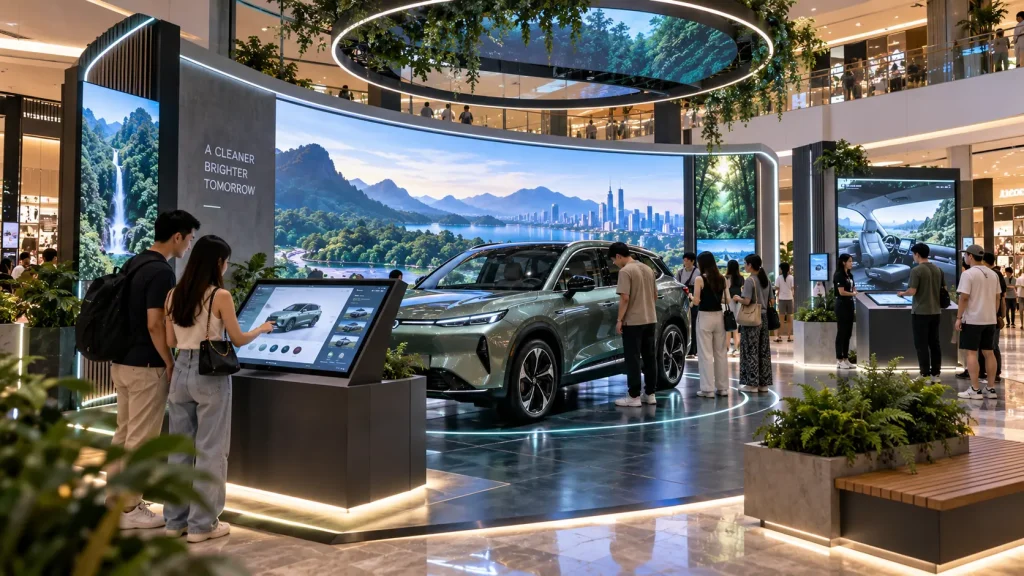
Immersive Brand Experience at a Glance
| Marketing Objective | Possible Experience |
|---|---|
| Attract Attention | Large-scale visual, projection, interactive installation or responsive environment |
| Introduce a Product | Physical product connected to interactive digital content |
| Explain a Feature | Interactive animation, product explorer or visual demonstration |
| Encourage Participation | Touch, motion, gesture or mobile interaction |
| Personalise the Experience | Visitor choices influence content, product configuration or output |
| Create Shareable Moments | Branded visual experience, interactive photo moment or personalised result |
What Is an Immersive Brand Experience?
An immersive brand experience is a physical or digital environment where visitors actively experience part of a brand, product or campaign.
The experience may use projection, touchscreens, interactive walls, sensors, physical products, LED displays or other technologies, but the technology itself is not the main idea.
A stronger experience begins with a simple question:
What should the visitor understand, feel or do?
For example, an automotive brand launching a new electric vehicle could allow visitors to explore the real car, change its colour digitally, discover selected features and trigger an environmental visualisation showing how the vehicle fits into different lifestyles.
The experience becomes:
See Product → Interact → Discover Feature → Understand Benefit → Remember Brand
Why Use Interactive Experiences for Brand Activations?
Traditional advertising communicates from the brand to the audience.
Interactive experiences create a two-way relationship.
The visitor performs an action and receives an immediate response.
This can make product information easier to explore because people are actively involved rather than passively watching a fixed presentation.
Interactive experiences can also help brands create different levels of engagement:
- Quick interactions for high-traffic activations
- Deeper product exploration for interested visitors
- Group experiences for events
- Personalised experiences for individual participants
Brand Experience for Product Launches
A product launch often has two different objectives.
The first is to create an impactful reveal. The second is to help visitors understand the product after the reveal.
Projection mapping, lighting and digital content can create the opening moment, while interactive technology can support deeper product exploration afterwards.
A possible journey could be:
Visual Reveal → Physical Product → Interactive Exploration → Feature Demonstration
This creates a longer experience than relying on the reveal moment alone.
For large visual reveals, see Projection Mapping for Product Launches.
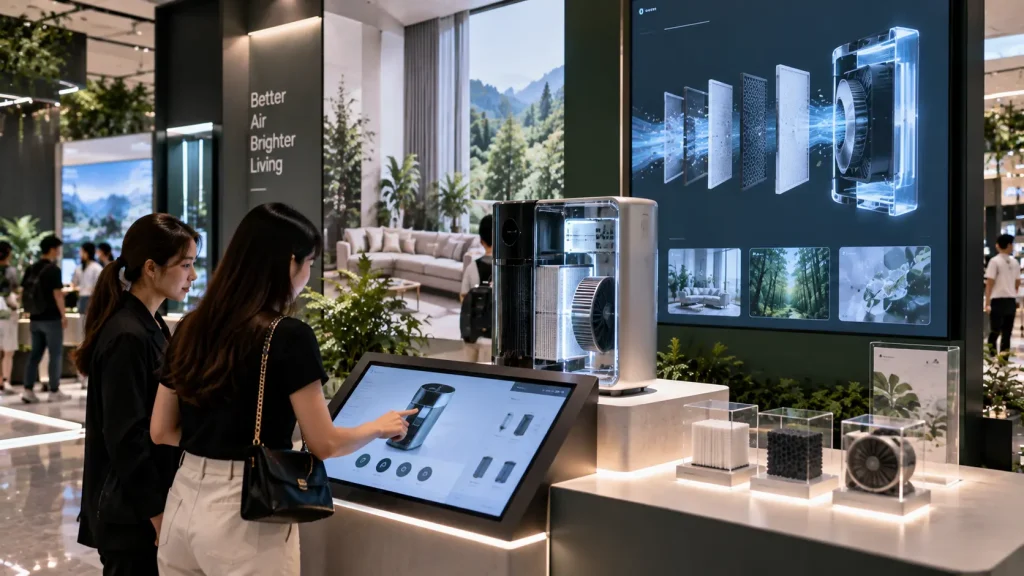
Physical Products with Interactive Digital Content
The physical product should remain central when visitors need to understand something tangible.
Digital technology can provide information around the product without replacing it.
For example, a visitor could touch a product feature on an integrated screen and trigger:
- A highlight on the physical product
- A 3D animation explaining the component
- A feature demonstration
- A comparison between configurations
- A supporting video
The relationship should remain simple:
Visitor Action → Physical Product → Relevant Digital Response
This approach can work for automotive, electronics, industrial products, medical equipment, consumer products and other physical products that benefit from deeper explanation.
Interactive Product Configurators
A product configurator allows visitors to explore different options before making a purchase or enquiry.
Depending on the product, visitors may change:
- Colour
- Model
- Material
- Accessories
- Features
- Packages
The selected configuration can be shown through a large display, touchscreen or 3D visualisation.
For automotive experiences, for example, visitors could change vehicle colours, rotate the exterior, explore the interior and compare selected specifications.
The interface should prioritise the options customers actually use rather than displaying every possible piece of product information on one screen.
Interactive Product Tables
An interactive product table can connect physical samples with digital information.
Visitors may place or move a product onto a designated area and trigger related content automatically.
For example:
Place Product → System Detects Product → Relevant Content Appears
The content may show product features, ingredients, applications, specifications or comparison information depending on the campaign.
This creates a physical interaction that can feel more natural than selecting the same product from a menu.
Interactive Walls for Brand Activations
Interactive walls are useful when the experience needs to be visible from a distance and accessible to more than one visitor.
The wall may respond to:
- Touch
- Body movement
- Gesture
- Objects
- Mobile interaction
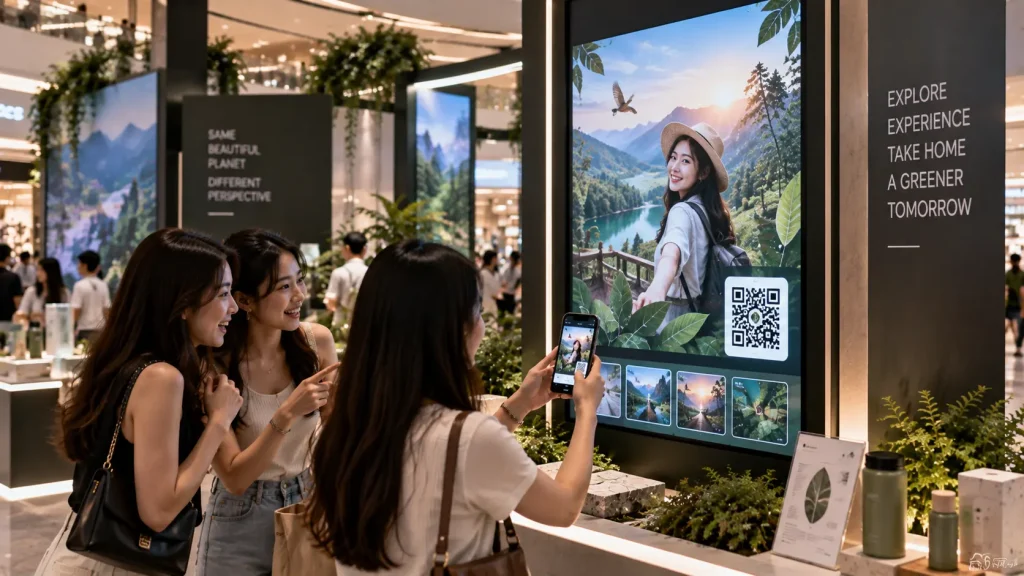
A brand could use the wall to reveal products, explore a campaign story or allow visitors to influence a larger visual environment.
The interaction should remain easy to understand. Visitors at a public activation should not require a long explanation before they know what to do.
Motion and Gesture-Based Brand Experiences
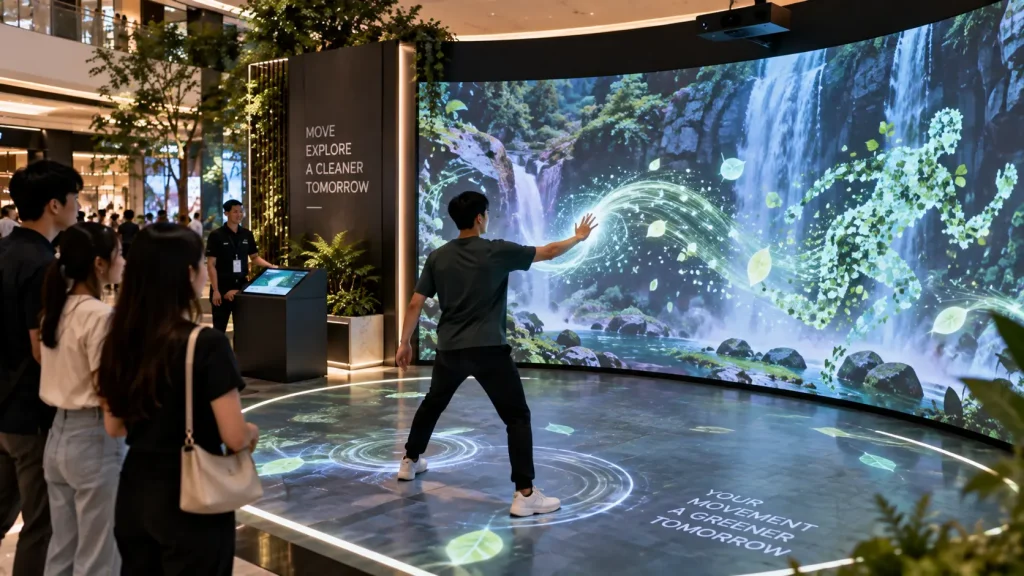
Motion tracking allows visitors to interact without touching a physical screen.
For example, walking through a digital environment could trigger visual changes around the visitor, while body movement could control selected content on a larger display.
This can be useful for experiences where movement itself is connected to the campaign idea.
A sports brand, for example, could create an activity based on movement or reaction, while a sustainability campaign could allow visitors to transform a digital environment through their actions.
The interaction method should support the brand concept rather than being selected only because the sensor technology is available.
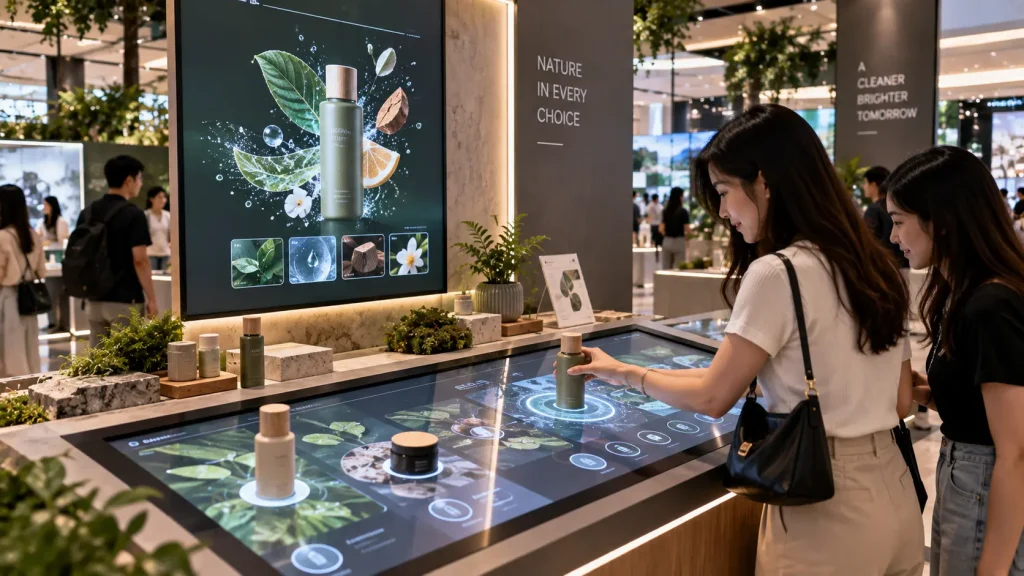
Immersive Projection for Brand Experiences
Projection can transform walls, floors, scenic structures or physical objects into part of the brand experience.
Instead of limiting the campaign to a rectangular display, visual content can extend across the physical environment.
This can be useful for:
- Product storytelling
- Brand worlds
- Launch experiences
- Interactive environments
- Temporary installations
- Photo and social moments
For experiences where visitors are surrounded by content, an immersive room can create a dedicated branded environment.
Personalised Brand Experiences
Personalisation can make an activation feel more relevant to each visitor.
The experience may respond to visitor choices rather than showing the same result to everyone.
For example, a visitor might choose:
- A preferred lifestyle
- A product configuration
- A destination
- A visual style
- A campaign theme
The system can then generate or display content based on those selections.
Personalisation does not need to involve complex AI. A well-designed choice-based experience can already create a clear sense of participation.
AI Photo Experiences
AI-assisted photo experiences can create personalised campaign visuals based on a visitor’s photograph.
The output can place the participant within a selected visual concept or branded environment while maintaining a consistent campaign direction.
This can work well when the generated result has a clear connection to the brand rather than functioning as a generic novelty photo.
For example, an automotive campaign could place visitors into different travel environments, while a tourism campaign could create personalised destination-inspired imagery.
The experience should also consider visitor consent, processing time and the practical flow of participants during busy activations.
Interactive Games for Brand Activations
Games can increase participation when the game mechanic is connected to the campaign.
Possible formats include:
- Reaction challenges
- Touch-based games
- Motion-controlled experiences
- Trivia
- Multiplayer challenges
- Mobile participation
The strongest branded games integrate product information or campaign ideas into the gameplay.
For example, instead of placing a logo on an unrelated racing game, the activity could challenge visitors to use the actual product features or campaign message to complete the experience.
From Interaction to Shareable Content
A brand activation can continue after the physical interaction ends.
Visitors may receive a personalised image, result or other digital output that they can keep or share.
A simple journey could be:
Participate → Personalised Result → QR Retrieval → Mobile Content
This allows the physical activation to create a digital touchpoint without forcing every visitor to download an application.
How Long Should a Brand Interaction Take?
The appropriate interaction length depends on the environment.
| Environment | Experience Approach |
|---|---|
| Busy Roadshow | Fast and intuitive interaction |
| Exhibition | Quick attraction with optional deeper product exploration |
| Product Launch | Structured reveal followed by interactive discovery |
| Retail | Self-guided product exploration |
| Experience Centre | Longer guided or self-guided journey |
Longer does not automatically mean more immersive.
A clear 30-second interaction can create more impact than a complicated five-minute experience that visitors do not understand.
How Should an Immersive Brand Journey Be Planned?
The experience should begin with the marketing objective rather than the hardware.
A practical journey may be:
Attract → Participate → Discover Product → Personalise → Share → Continue
Different technologies can support different stages.
A large visual may attract attention, a physical product can create credibility, interaction can reveal deeper information and a personalised output can extend the experience onto the visitor’s phone.
The result is a connected immersive experience rather than several unrelated digital activities placed within the same activation.
Immersive Brand Experiences for Roadshows
Roadshows require experiences that can attract attention quickly, handle repeated participation and operate reliably across long event hours.
The interaction should usually be easy to understand without requiring a staff member to explain every step.
A roadshow journey might be:
See Activation → Join Interaction → Discover Product → Receive Result → Continue
Depending on the campaign, this could involve a touchscreen product explorer, interactive game, motion-based experience, AI photo activation or physical product connected to digital content.
For multi-location roadshows, the system should also consider transport, setup time, calibration and how easily the experience can be reproduced at different venues.
Immersive Experiences for Retail
Retail experiences have a different objective from short-term event activations.
The technology may operate every day and should help customers explore products without interrupting the normal retail environment.
Possible applications include:
- Interactive product catalogues
- Product configurators
- Virtual product exploration
- Physical product detection
- Interactive comparison tools
- Digital product storytelling
- Interactive displays
For example, a customer could pick up or place a product in a designated area and automatically reveal related information on a nearby display.
The interaction should support the purchase journey rather than becoming a separate attraction with no connection to the product.
Brand Experiences at Exhibitions
Exhibitions create a particular challenge because many brands compete for attention within the same environment.
An interactive experience can help create a reason for visitors to stop, but attracting attention is only the first step.
A stronger exhibition experience can move through three stages:
Attract → Engage → Explain
A large responsive visual might attract visitors from the aisle. A short interaction encourages participation. The experience can then lead into a product demonstration or conversation with the brand team.
For broader exhibition applications, see Immersive Exhibition Malaysia.
Designing for High Visitor Traffic
A visually impressive activation can still fail operationally if only a small number of people can participate.
High-traffic environments should consider:
- Interaction duration
- Number of participants at one time
- Queue formation
- Reset time between visitors
- Registration requirements
- Content processing time
- Staff assistance
- Output collection
For example, if an activation requires several minutes of registration before a short interactive experience, the registration process may become the actual bottleneck.
The complete visitor flow should therefore be tested rather than evaluating the interactive content alone.
Should Visitors Register Before Participating?
Not every brand experience needs registration.
Requiring visitors to complete a form before they can interact may reduce participation, particularly in high-traffic public activations.
Registration is more suitable when there is a clear reason to collect information, such as:
- Contest participation
- Prize redemption
- Product enquiry
- Appointment booking
- Personalised content delivery
- Lead generation
Where possible, the amount of information requested should match the value the visitor receives.
Lead Capture and Brand Activations
Interactive experiences can support lead generation, but the lead capture process should be designed as part of the visitor journey.
For example:
Explore Product → Show Interest → Submit Details → Receive Follow-Up
This is usually more natural than asking every passer-by to register before they understand what the brand is offering.
Depending on the project, captured information can be exported or connected to an approved external system where suitable integration is available.
Data and Privacy Considerations
Brand experiences that collect personal information, photographs or other visitor data should clearly define why the information is being collected and how it will be used.
This is particularly relevant for:
- Registration systems
- AI photo experiences
- Lead capture
- Contests
- Personalised digital outputs
- Analytics linked to identifiable visitors
The project should consider appropriate visitor consent, data retention requirements and access to collected information according to the campaign and applicable requirements.
Where personal information is unnecessary, an interactive experience can often operate without identifying individual visitors.
Can Brand Interaction Data Be Measured?
Depending on the system, selected interaction data can be recorded to help the brand understand how the activation was used.
Possible measurements may include:
- Number of interactions
- Selected product options
- Game participation
- Completed experiences
- QR retrievals
- Lead submissions
The useful metrics should be defined before development begins.
Collecting large amounts of data does not automatically make an activation more valuable if the information does not support a marketing decision.
Temporary vs Permanent Brand Experiences
| Temporary Activation | Permanent Brand Experience |
|---|---|
| Roadshows, launches and exhibitions | Retail, showroom and experience centre |
| Designed for faster installation | Integrated into permanent architecture |
| May need to travel between venues | Designed for repeated daily operation |
| Campaign-specific content | Content may require future updates |
| Short-term technical support | Maintenance access and long-term reliability are important |
The same interaction concept may require a different hardware and installation approach depending on whether it will operate for three days or several years.
For permanent corporate environments, see Interactive Experience Centre Malaysia.
Can One Brand Experience Be Reused?
Yes. Where a campaign is expected to travel between multiple locations, selected physical and digital components can be designed for reuse.
For example, the same interactive application may operate at several roadshow locations while campaign artwork, product information or selected content is updated.
Reusable installations should consider:
- Transport dimensions
- Modular structures
- Equipment protection
- Installation time
- Venue power
- Network requirements
- Calibration
Planning reuse from the beginning is more effective than attempting to convert a one-location installation after it has already been fabricated.
Does an Immersive Brand Experience Need Internet?
Not necessarily.
Many interactive applications, games, product configurators, motion experiences and media installations can operate locally without continuous internet access.
This can be useful at event venues where network quality may be unpredictable.
Internet connectivity may still be required for:
- Cloud-based AI processing
- Online registration
- Live data
- Remote databases
- Social or online integrations
- Cloud-based content delivery
Where online functionality is essential, network requirements should be confirmed before the activation opens.
What Hardware Is Used?
The hardware depends on the interaction rather than following one standard package.
A brand experience may use:
- Touchscreens
- Commercial displays
- LED screens
- Projectors
- Computers
- Motion or depth sensors
- Cameras
- RFID or object detection systems
- Audio equipment
- Mobile devices
- Control systems
Hardware selection should consider the venue, operating hours, visitor traffic and whether the system is temporary or permanent.
Content Production for Immersive Brand Experiences
The experience is only as effective as the content that responds to the visitor.
Depending on the project, content production may include:
- Interface design
- Motion graphics
- 2D animation
- 3D animation
- Product visualisation
- Projection content
- Sound design
- Personalised visual outputs
Existing brand assets can often be incorporated, but content originally created for social media or presentation slides may need to be adapted for interactive or large-format experiences.
How Much Does an Immersive Brand Experience Cost in Malaysia?
There is no fixed price because the scope can range from one focused interactive activation to a complete multi-zone brand experience.
Major cost factors include:
- Type of interaction
- Custom software development
- Hardware requirements
- Physical fabrication
- Projection or LED systems
- Sensor technology
- 2D and 3D content production
- AI or online processing requirements
- Number of activation days
- Number of locations
- Installation and dismantling
- On-site technical support
A visually large activation is not always more expensive than a smaller one. A compact installation requiring custom software, real-time processing and personalised output may involve more development than a large passive visual display.
For broader planning, see Immersive Experience Cost Malaysia.
How Can the Budget Be Prioritised?
A useful approach is to identify one strong interaction rather than dividing the budget across too many disconnected technologies.
| Priority | Question to Ask |
|---|---|
| Attraction | What makes people notice the activation? |
| Interaction | What should visitors actually do? |
| Product | What should they understand about the product? |
| Output | What do they receive or remember afterwards? |
| Operation | Can the experience handle the expected visitor volume? |
For many campaigns, one clear hero experience supported by simpler surrounding content can be more effective than several complicated activities competing for attention.
Immersive Brand Experience Project Process
A typical project can follow these stages:
- Campaign Objective – Define what the brand wants visitors to understand or do.
- Audience & Environment – Understand the target audience, venue and expected visitor traffic.
- Experience Concept – Develop the central interaction and visitor journey.
- Technical Planning – Determine suitable hardware, software, infrastructure and physical requirements.
- Content & Software Development – Produce interfaces, animation, interactive logic and visual content.
- Fabrication & Integration – Connect physical structures, products and technology.
- Testing – Test interaction flow, performance and visitor throughput.
- Installation & Rehearsal – Set up and test the complete activation at the venue.
- Live Operation – Provide technical support where required.
What Information Is Needed for a Proposal?
Useful information for an initial proposal includes:
- Brand and product
- Campaign objective
- Target audience
- Venue and available space
- Event or activation dates
- Expected visitor volume
- Preferred interaction or reference
- Available brand assets
- Product samples or 3D models
- Registration or lead capture requirements
- Number of locations
- Estimated budget range
If the activation concept has not yet been developed, the project can begin from the campaign objective rather than a predetermined technology.
Why MyDigital Asia?
MyDigital Asia develops immersive brand experiences by connecting physical products, digital content and interactive technology into one practical visitor journey.
Depending on the campaign, our scope can include:
- Experience concept
- Interactive touchscreen applications
- Product configurators
- Interactive games
- Interactive walls and floors
- Motion tracking and sensors
- RFID and object-triggered experiences
- Projection mapping
- Immersive environments
- AI photo experiences
- 2D and 3D animation
- Physical-digital integration
- Installation and technical support
The objective is to create an experience where the technology strengthens the product and campaign message rather than distracting from them.
Frequently Asked Questions
Can an immersive brand experience be used for a roadshow?
Yes. Interactive systems can be designed as modular installations that travel between multiple roadshow locations, subject to venue and technical requirements.
Can visitors interact with the actual physical product?
Yes. Physical products can be connected to digital content through touchscreens, sensors, RFID, object detection or other suitable methods depending on the experience.
Can the activation collect leads?
Yes. Registration or lead capture can be integrated where it supports the campaign objective. The visitor flow and appropriate data handling should be considered during planning.
Can the system work without internet?
Many interactive experiences can operate locally. Internet access is mainly required for functions that depend on cloud processing, live information or external online services.
Can the same activation be reused at multiple venues?
Yes. Hardware, structures and digital content can be planned for reuse when the campaign is expected to travel, although venue dimensions and infrastructure should still be checked for each location.
How early should we plan an interactive brand activation?
The required lead time depends on the complexity of the software, content, fabrication and hardware. Projects involving custom interaction, 3D content or physical fabrication benefit from earlier planning and testing.
Create an Immersive Brand Experience in Malaysia
A successful brand experience should give visitors a reason to participate and a clear reason to remember the product afterwards.
The strongest concept may be a large immersive environment, but it can also be one simple interaction built around the physical product.
MyDigital Asia can support brand activations from experience concept and interactive software through digital content, physical integration, installation and live technical operation.
Contact MyDigital Asia with your campaign objective, product, venue, activation dates and expected audience to discuss an immersive brand experience in Malaysia.
Related Immersive Experience Guides
- Immersive Experience Malaysia
- Immersive Room Malaysia
- Immersive Exhibition Malaysia
- Immersive Museum Malaysia
- Interactive Experience Centre Malaysia
- Immersive Visitor Centre Malaysia
- Immersive Technology for Events
- Immersive Experience Cost Malaysia
- How to Design an Immersive Experience
Request a Free Consultation
Looking for Interactive Maps, Interactive Solutions or Event Technology?

LATEST POSTS