
10 Interactive Museum Exhibit Ideas for Modern Visitor Experiences
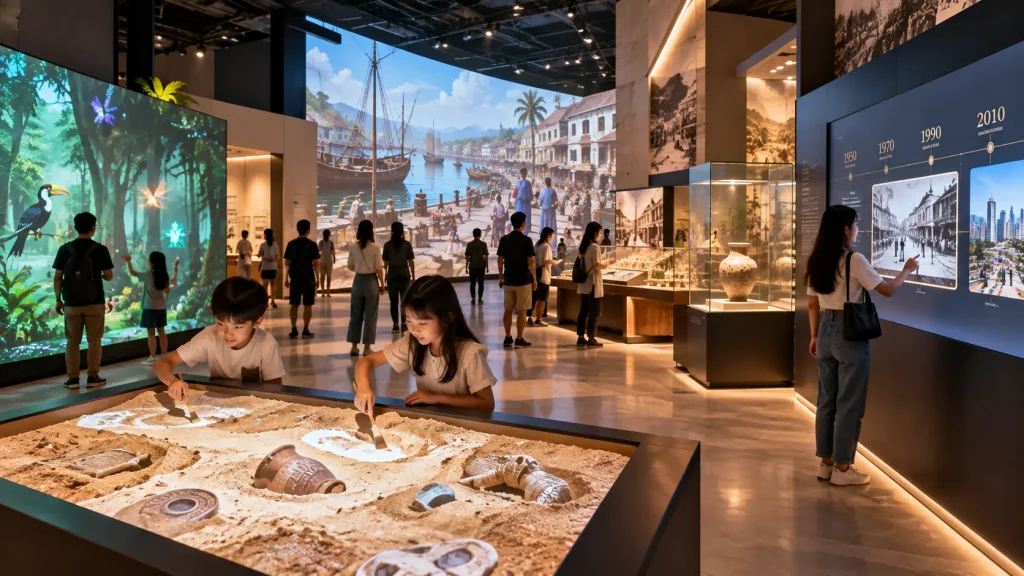
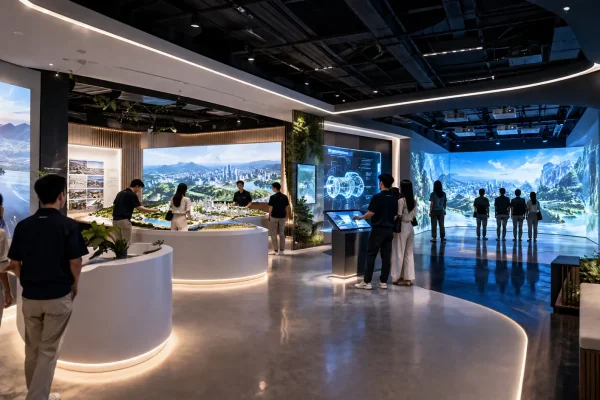
Museums and visitor attractions are evolving beyond traditional display panels and static exhibits. Today, interactive technology allows visitors to explore stories, discover historical information and participate in experiences that make learning more engaging.
From projection mapping and motion sensors to augmented reality and immersive storytelling, there are many interactive museum exhibit ideas that can transform how visitors connect with an exhibition.
Whether you are planning a heritage gallery, science centre, cultural exhibition or permanent visitor experience in Malaysia, here are 10 interactive museum concepts worth exploring.
1. Interactive Historical Timeline Wall
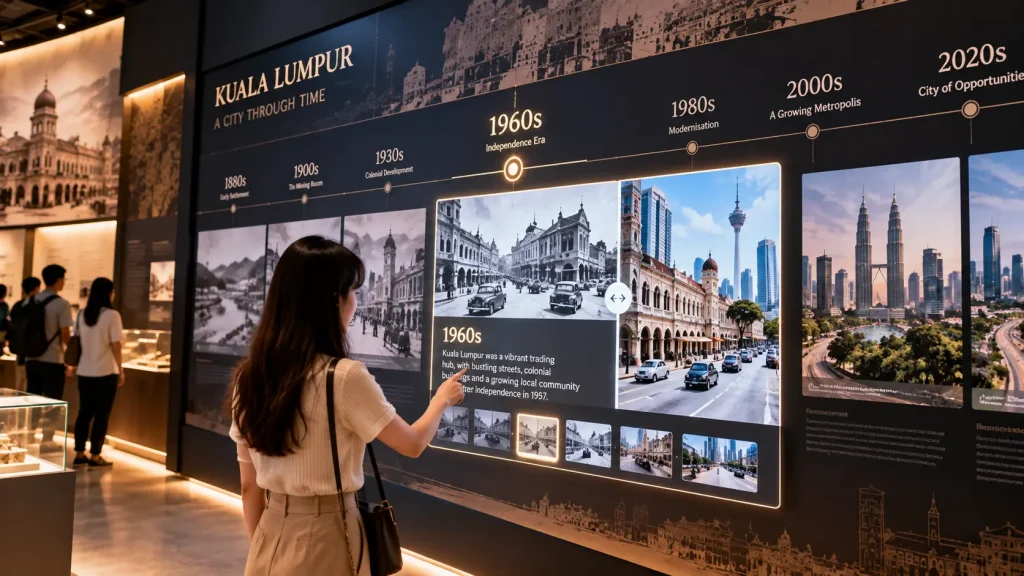
Turn a traditional historical timeline into an interactive visual journey.
Instead of reading information from a long wall panel, visitors can select different years or historical milestones to reveal photographs, animations, videos and related stories.
For example, a heritage gallery could showcase how Kuala Lumpur developed over different decades, allowing visitors to compare historical streetscapes with modern city views.
How it works: A large touchscreen or interactive projection wall presents a digital timeline. Visitors select dates to explore corresponding multimedia content.
Best for: Heritage museums, city galleries, corporate history exhibitions and cultural centres.
2. Interactive Archaeological Dig Experience
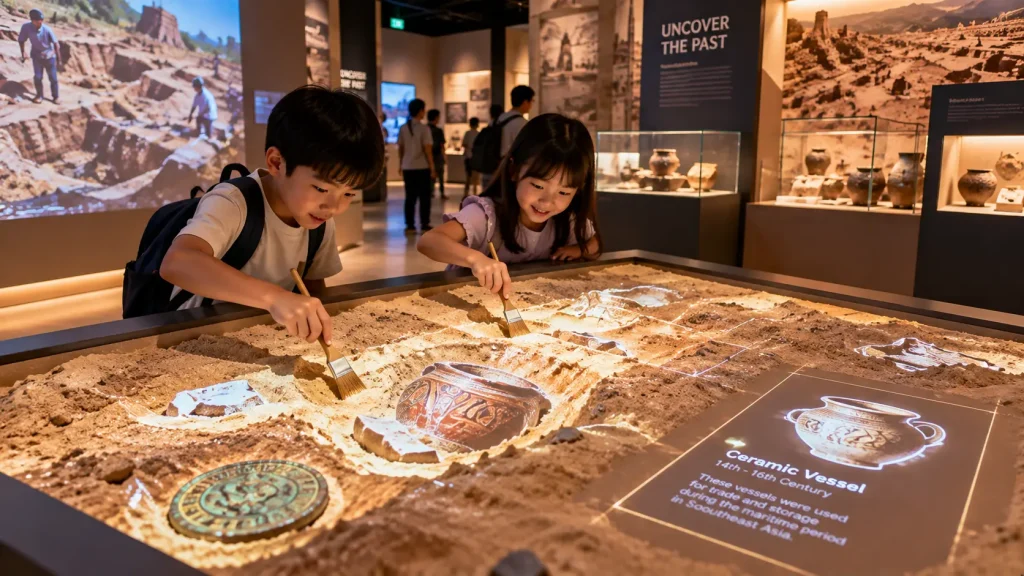
Allow visitors to experience the excitement of archaeological discovery through an interactive excavation activity.
A projected excavation surface displays layers of sand and buried objects. Visitors use a physical brush or hand movements to gradually uncover virtual artifacts.
Once an object is revealed, the system presents information about its historical significance and original use.
How it works: An overhead projector and suitable tracking sensors detect brushing or hand movements, triggering animations that reveal digital artifacts.
Best for: Archaeology museums, history exhibitions, children’s discovery centres and educational attractions.
3. Interactive Shadow Storytelling Wall
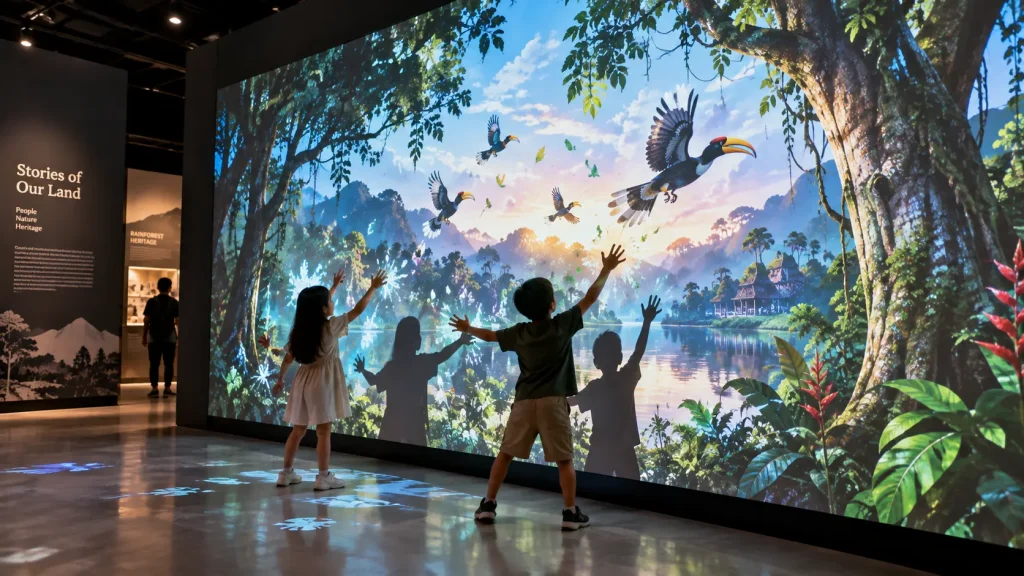
Transform visitors’ silhouettes into part of an animated historical or cultural story.
When visitors stand in front of a large projection wall, their shadows can interact with animated characters, traditional environments or cultural elements.
For example, a visitor’s movement might trigger flying birds, growing trees or animated scenes inspired by Malaysian folklore.
How it works: A camera or depth sensor detects visitor silhouettes and body movements. Custom interactive software responds with real-time projected animations.
Best for: Cultural museums, family attractions, children’s galleries and storytelling exhibitions.
4. Augmented Reality Historical Reconstruction
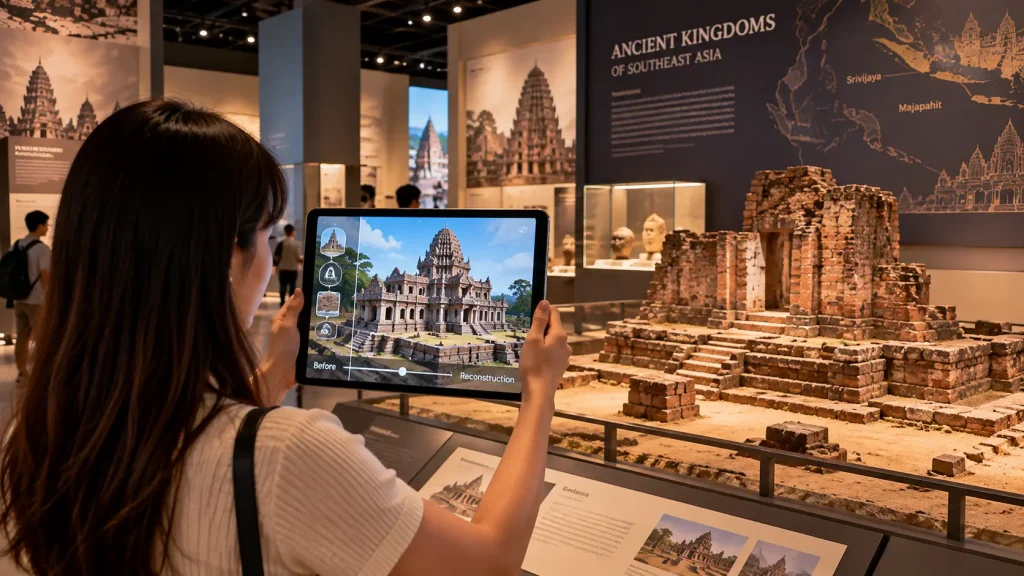
Help visitors visualise historical locations or objects as they may have appeared in the past.
By pointing a tablet at a designated exhibit, visitors can see a digital reconstruction layered over the physical display.
For example, an architectural ruin or historical building model could be digitally reconstructed to demonstrate its original appearance.
How it works: An AR-enabled tablet recognises a designated marker, image or tracked surface and displays aligned 3D content.
Best for: Heritage sites, architectural museums, historical galleries and tourism attractions.
5. Interactive Science Experiment Station
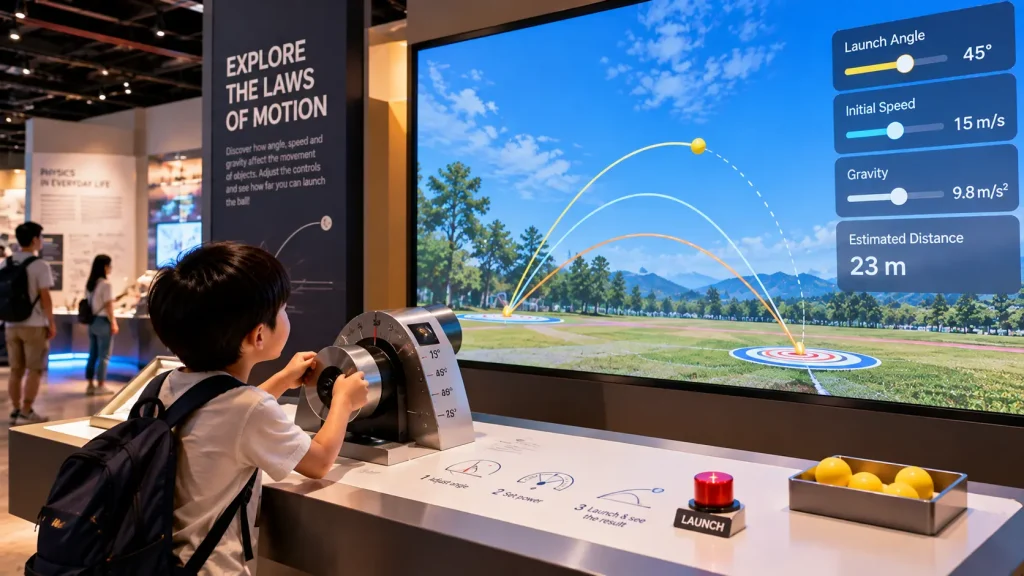
Let visitors explore scientific principles through hands-on digital experiments.
Instead of watching a prerecorded demonstration, visitors can adjust variables and immediately observe the results.
For example, a physics exhibit could allow visitors to change gravity, launch angle or object weight to see how each factor affects a simulated experiment.
How it works: Physical controls, touchscreen inputs or sensors connect to a real-time simulation displayed on a screen.
Best for: Science centres, STEM galleries, educational exhibitions and children’s discovery spaces.
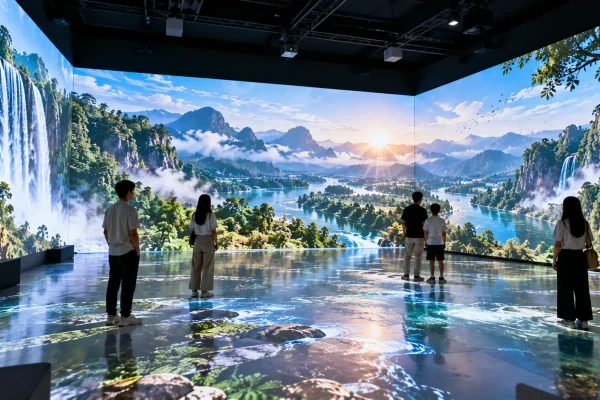
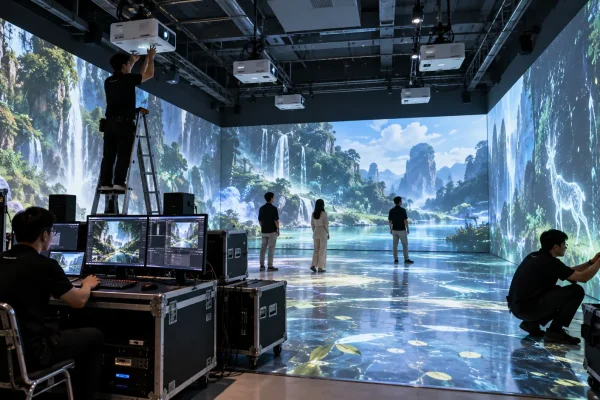
6. Immersive Historical Room Experience
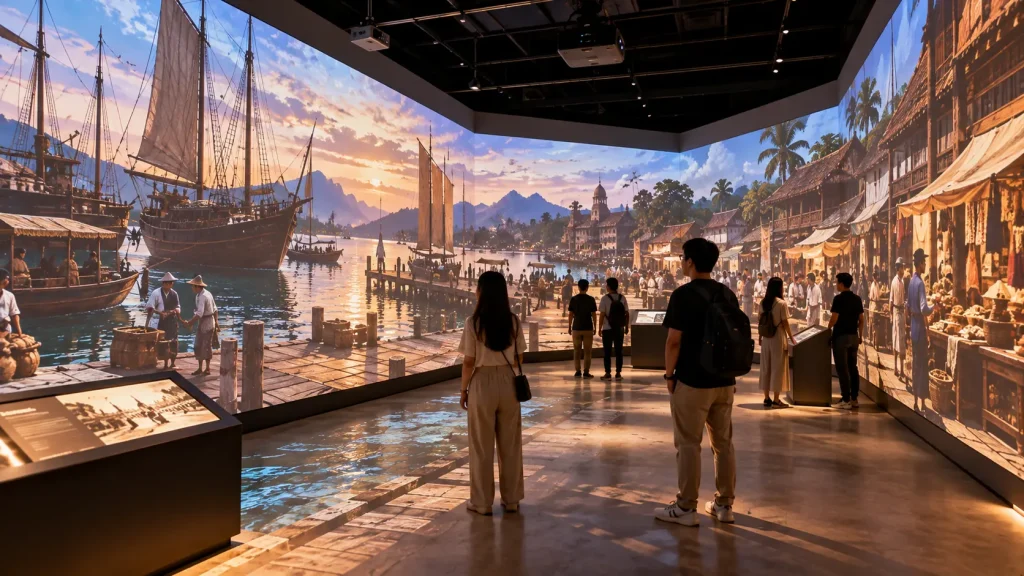
Transport visitors into another period through a room-scale visual and audio environment.
For example, a heritage museum could recreate the atmosphere of an old Malaysian trading port, complete with moving ships, market activity and environmental sounds.
Visitors experience the environment through coordinated visuals across multiple walls rather than watching a conventional documentary on one screen.
How it works: Multiple projectors or LED displays present synchronised visual content, supported by spatial audio and optional interactive triggers.
Best for: National museums, heritage galleries, tourism attractions and permanent immersive exhibitions.
7. Interactive Traditional Music Installation
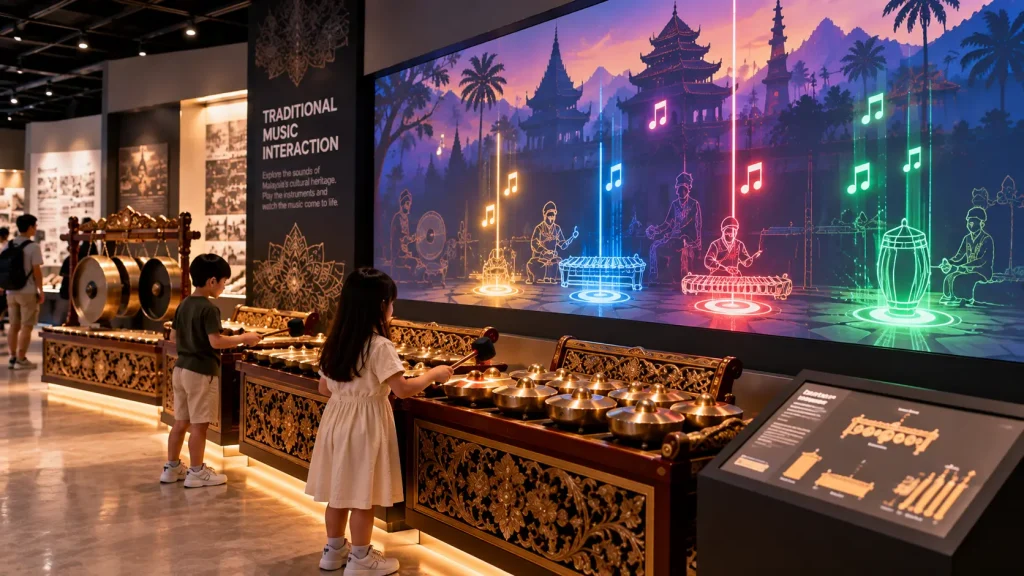
Introduce cultural instruments through an installation that visitors can play and explore.
Visitors select or activate virtual instruments such as the kompang, gamelan or traditional drums to hear their individual sounds.
Multiple participants can contribute different rhythms to create a collaborative musical performance.
How it works: Touch-sensitive surfaces, physical pads or motion sensors trigger recorded instrument samples and accompanying animations.
Best for: Cultural museums, music exhibitions, heritage centres and family attractions.
8. Interactive Wildlife Discovery Experience
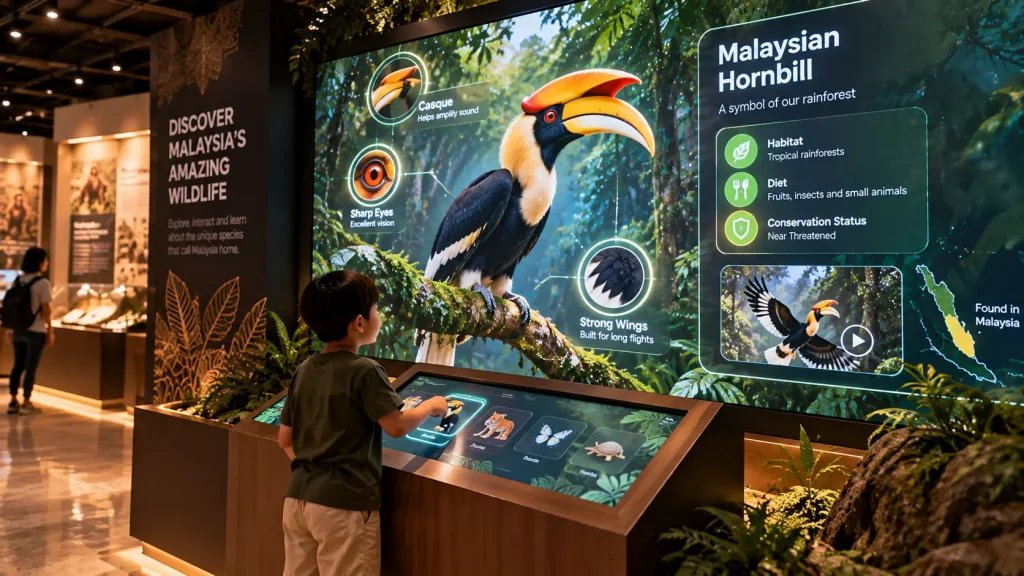
Help visitors learn about wildlife through movement-based exploration.
A large digital forest scene features animals that respond to visitor interaction. When someone approaches a designated area, an animal may appear, move or reveal educational information.
For example, visitors could discover the habitats and behaviours of Malaysian wildlife such as hornbills, tapirs and orangutans.
How it works: Motion sensors or depth cameras detect visitor position and trigger animal animations and educational content on a large display or projection surface.
Best for: Natural history museums, wildlife education centres, environmental galleries and family attractions.
9. Interactive Historical Object Restoration
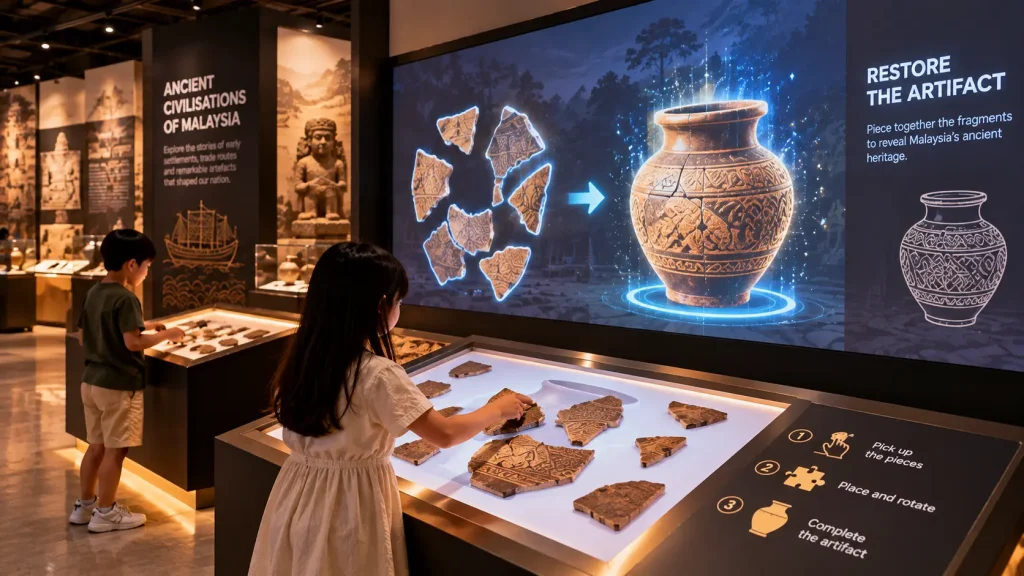
Allow visitors to digitally restore damaged or incomplete historical objects.
Visitors select missing fragments of a ceramic vessel, traditional decorative object or archaeological artifact and place them into their correct positions.
When the restoration is completed, the system reveals a reconstructed version of the object and explains its historical background.
How it works: A touchscreen puzzle application allows visitors to drag, rotate and match digital fragments using a prepared 2D or 3D object model.
Best for: Archaeology museums, heritage exhibitions, educational galleries and children’s learning spaces.
10. Interactive Visitor-Generated Digital Art Wall
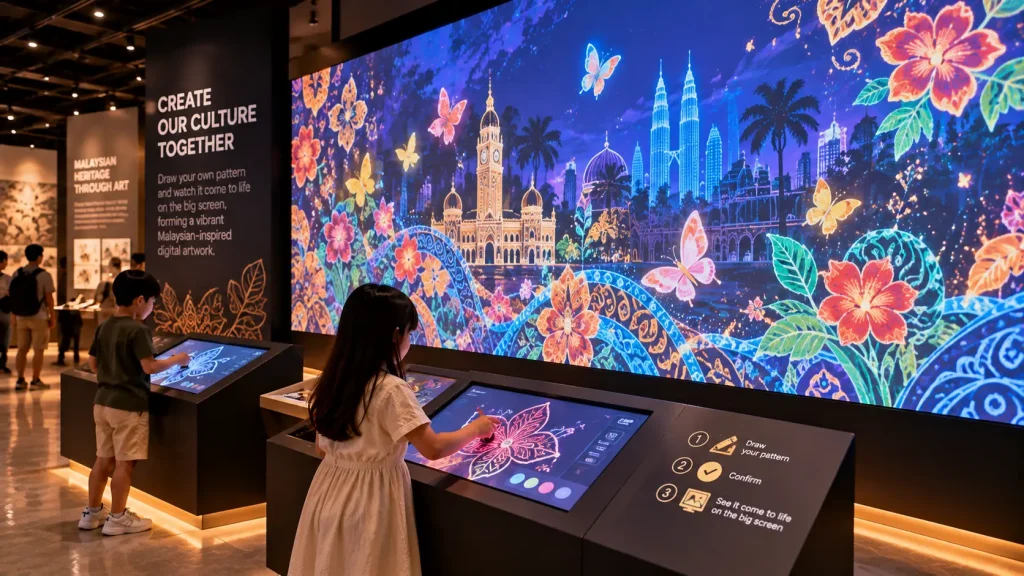
Invite visitors to contribute to a shared digital artwork that evolves throughout the exhibition.
Each visitor creates a small visual element, such as a colourful pattern inspired by local textiles, cultural symbols or nature.
After submission, their artwork becomes part of a larger animated composition displayed on a museum wall.
Over time, the installation grows into a collaborative visual representation of the visitor community.
How it works: Visitors create artwork on a touchscreen station. Approved submissions are transferred to a central visual system and displayed through projection or LED screens.
Best for: Art museums, cultural galleries, community exhibitions and participatory installations.
Choosing the Right Interactive Museum Exhibit
The most suitable interactive exhibit depends on the museum’s educational objectives, available space, visitor demographics and exhibition content.
| Experience Goal | Recommended Interactive Exhibit |
|---|---|
| Explore historical milestones | Interactive Historical Timeline Wall |
| Encourage hands-on discovery | Interactive Archaeological Dig |
| Engage visitors through movement | Interactive Shadow Storytelling Wall |
| Visualise the past | AR Historical Reconstruction |
| Explain scientific concepts | Interactive Science Experiment Station |
| Create environmental immersion | Immersive Historical Room |
| Explore cultural music | Interactive Traditional Music Installation |
| Learn about wildlife | Interactive Wildlife Discovery |
| Encourage problem-solving | Interactive Object Restoration |
| Collect visitor creativity | Visitor-Generated Digital Art Wall |
What Technology Is Used in Interactive Museum Exhibits?
Interactive museum exhibits can combine digital displays, projection systems, sensors, physical objects and custom software to create engaging visitor experiences.
The technology should be selected according to the exhibition’s storytelling objectives, visitor behaviour and installation environment.
- Interactive Touchscreens: Suitable for digital timelines, artifact exploration, educational puzzles and multimedia information.
- Projection Mapping: Projects animations and visual content onto walls, floors, models or specially designed surfaces.
- Motion and Depth Sensors: Detect visitor movements, body positions or gestures to trigger interactive responses.
- Augmented Reality (AR): Adds digital reconstructions, animations or information to physical exhibits through supported devices.
- Physical Interactive Controls: Buttons, rotary controls, RFID objects and touch-sensitive surfaces create hands-on experiences.
- Multi-Display Systems: Synchronise visuals across LED screens, projectors and other digital displays.
- Custom Interactive Software: Connects visitor inputs with animations, educational content, scoring systems and multimedia responses.
Projection Mapping vs Touchscreen vs Sensor-Based Exhibits
Different interactive technologies offer different visitor experiences. Choosing the right approach depends on how visitors are expected to interact with the exhibit.
| Technology | Main Advantage | Suitable Application |
|---|---|---|
| Touchscreen | Direct interaction and detailed information | Timelines, artifact puzzles, educational content |
| Projection Mapping | Large-scale visual storytelling | Historical environments, animated exhibits |
| Motion Sensors | Touchless visitor participation | Shadow walls, wildlife experiences |
| Augmented Reality | Digital content aligned with physical exhibits | Historical reconstruction |
| Physical Controls | Tangible, hands-on learning | Science experiments, music installations |
What Should Be Considered Before Installing an Interactive Museum Exhibit?
Unlike temporary event installations, permanent museum exhibits must be designed for frequent public use and long-term operation.
Important planning considerations include:
- Visitor Flow: Ensure visitors can interact without creating congestion around the exhibit.
- Lighting Conditions: Projection-based installations may require controlled lighting, while bright galleries may benefit from LED or commercial displays.
- Accessibility: Consider screen height, reach distance, wheelchair access and alternative ways to experience content.
- Content Languages: Provide appropriate language options for local and international visitors.
- Equipment Protection: Use secure mounting, protected cables and suitable enclosures for public environments.
- Daily Operation: Plan automatic startup, shutdown, content reset and straightforward operation for museum staff.
- Maintenance: Allow access for equipment servicing, software updates and replacement of components.
How Much Does an Interactive Museum Exhibit Cost in Malaysia?
The cost of an interactive museum exhibit in Malaysia depends on the scale of the installation, technical complexity, multimedia content and required hardware.
For example, a single touchscreen educational game generally has different development requirements from a multi-projector immersive historical room.
Key cost factors include:
- Concept development and exhibition experience design
- Custom interactive software development
- 2D animation, 3D modelling and multimedia production
- Touchscreens, projectors, LED displays and sensors
- Custom structures, exhibit fabrication and mounting
- Audio systems and interactive control hardware
- Installation, calibration and system testing
- Multilingual content development
- Maintenance, technical support and future updates
For larger museum projects, preparing a detailed scope of work and technical proposal helps determine an appropriate budget before implementation.
Frequently Asked Questions
Can interactive museum exhibits operate without internet?
Yes. Many exhibits can run offline using locally stored software, videos, animations and educational content. Features that depend on cloud services, live databases or remote content management may require internet connectivity.
Can multiple visitors interact with an exhibit at the same time?
Yes. Multi-touch displays, tracking sensors and collaborative software can support multiple visitors, depending on the hardware and interaction design.
Can existing museum displays be upgraded with interactive technology?
Yes. Existing display areas may be enhanced with projection mapping, interactive screens, sensors or augmented reality. A site assessment is recommended to confirm the available space, lighting, power supply and equipment mounting options.
Can the exhibits support English, Bahasa Malaysia and Chinese?
Yes. Multilingual interfaces, subtitles, audio narration and educational content can be developed based on the museum’s visitor requirements.
How are permanent interactive exhibits maintained?
Permanent installations should include a maintenance plan covering equipment inspection, software updates, content backup, cleaning and technical troubleshooting. Remote monitoring and content management may also be incorporated where required.
Interactive Museum Exhibit Design & Development in Malaysia
MyDigital Asia develops custom interactive experiences for museums, heritage galleries, visitor centres, science exhibitions and public attractions in Malaysia.
Our solutions can combine projection mapping, interactive touchscreens, motion sensors, augmented reality, immersive environments and custom software to create meaningful visitor experiences.
Whether you are planning a single interactive exhibit or a multi-zone visitor experience, our team can help explore suitable technologies, interaction concepts and installation requirements.
Planning an interactive museum project? Contact MyDigital Asia with your exhibition concept, location, available space, preferred technology and estimated budget to discuss a customised proposal.
Related Interactive Experience Ideas
- 10 Interactive Wall Ideas
- 10 Sensor-Based Interactive Installation Ideas
- 10 Immersive Room Ideas
- 10 Physical-Digital Interactive Experience Ideas
- 10 Interactive Table Ideas
Request a Free Consultation
Looking for Interactive Maps, Interactive Solutions or Event Technology?

LATEST POSTS