
Immersive Museum Malaysia
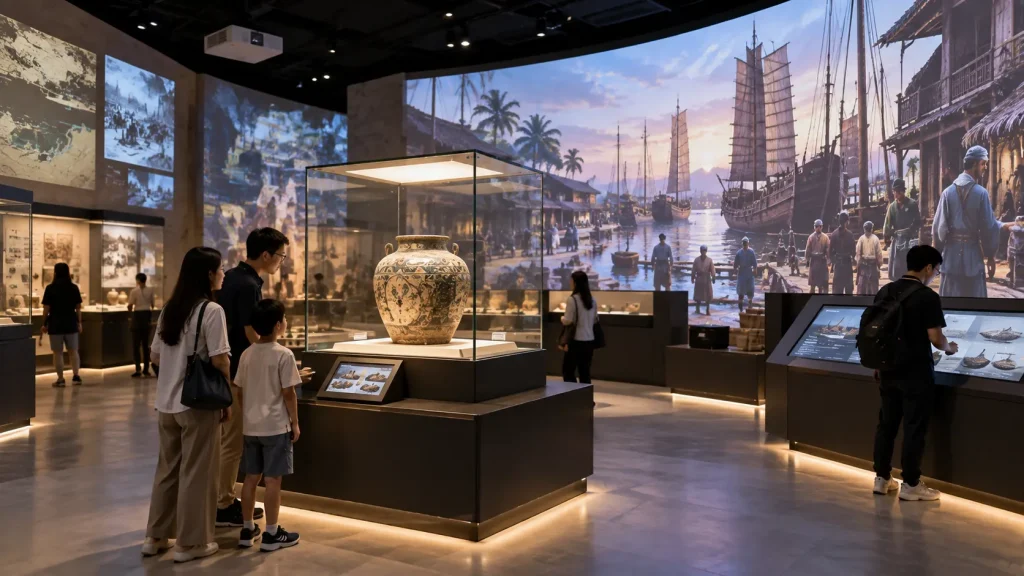
An immersive museum experience uses digital technology to help visitors understand, explore and connect with stories, artefacts and information inside a physical museum environment.
Instead of replacing traditional exhibits with screens, immersive technology can add context around real objects through projection, interactive displays, digital storytelling, sound and responsive installations.
MyDigital Asia develops immersive and interactive museum experiences in Malaysia for museums, cultural galleries, heritage spaces, visitor centres and permanent exhibitions.
The objective is not to make every part of a museum digital. It is to use technology where it helps visitors understand the story more clearly.
Immersive Museum at a Glance
| Museum Requirement | Possible Experience |
|---|---|
| Explain an Artefact | Digital context, animation or interactive information around the real object |
| Recreate a Place | Immersive projection, environmental visuals and sound |
| Explore Information | Interactive touchscreen, map or timeline |
| Understand a Process | Animation, interactive visualisation or physical-digital exhibit |
| Engage Younger Visitors | Interactive challenges, motion-based experiences or educational games |
| Present Large Archives | Searchable digital collections and interactive media |
What Is an Immersive Museum Experience?
An immersive museum experience connects physical exhibits with digital content to create a stronger sense of context and participation.
For example, a historical artefact may remain safely inside a display case while the surrounding wall recreates the environment where the object was originally used.
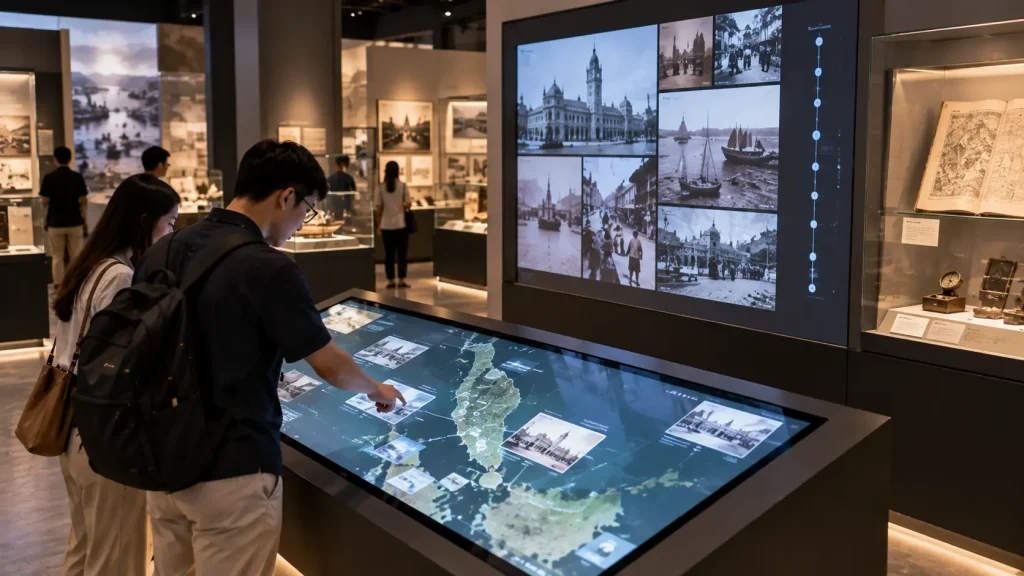
A nearby interactive display could then allow visitors to explore additional photographs, maps or historical information without covering the gallery walls with long text panels.
The experience becomes:
Real Artefact → Historical Context → Visitor Exploration → Deeper Understanding
The physical collection remains central. Digital technology helps visitors understand why it matters.
Should Digital Technology Replace Physical Museum Exhibits?
In most cases, no.
Real artefacts, documents, models and physical environments often provide authenticity that digital content cannot replace.
The stronger approach is usually to combine both.
For example:
- A real historical object can be supported by animated context.
- An architectural model can connect to an interactive map.
- An old photograph can expand into a digital timeline.
- A physical replica can trigger related audio or visual content.
- A reconstructed environment can be enhanced with projection and sound.
This allows visitors to experience the physical collection while accessing information in a more visual and interactive way.
How Can Technology Help Explain Artefacts?
Some museum objects are visually interesting but difficult to understand without additional explanation.
A visitor may see an old tool, machine, document or cultural object but not immediately understand how it was used.
Digital content can help reveal that missing context.
For example, projection or a nearby display can show:
- How an object originally operated
- How it was manufactured
- Where it was used
- Who used it
- How it changed over time
- What is hidden inside it
This is particularly useful when the original object cannot be handled or operated by visitors.
Immersive Historical Storytelling
Historical information is often presented through photographs, documents and written descriptions.
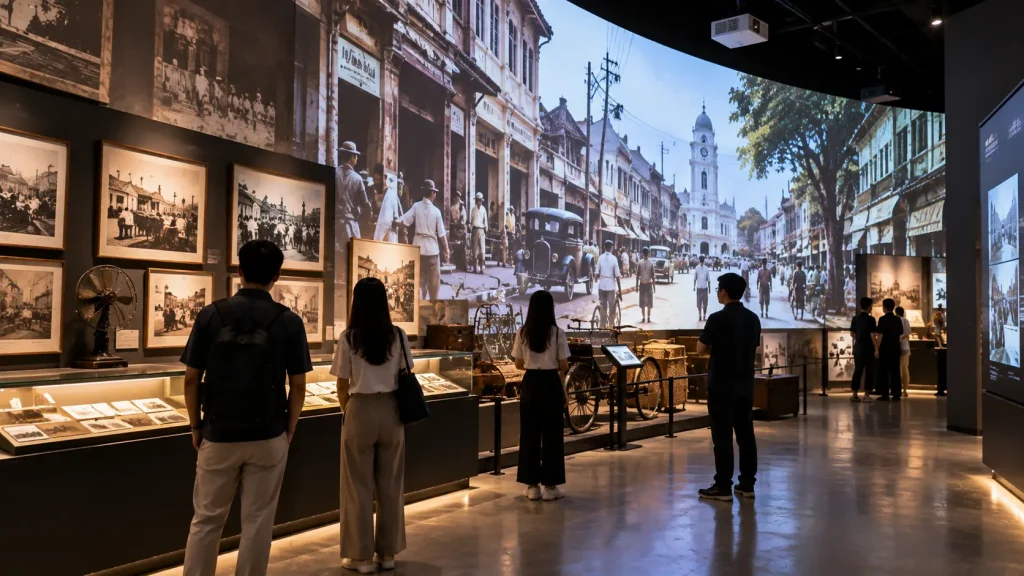
Immersive storytelling can connect these materials into a spatial experience.
For example, a gallery about an early Malaysian trading port could combine real ceramics and historical objects with panoramic visuals of the harbour, environmental sound and animated maps showing trading routes.
Visitors still see the real collection, but the surrounding environment helps them imagine the larger historical setting.
This approach can be developed inside a dedicated immersive room or integrated into selected areas of a conventional gallery.
Interactive Museum Touchscreens
Touchscreens are useful when a museum contains more information than can comfortably fit onto physical panels.
Visitors can explore content according to their own interests instead of following one fixed sequence.
Museum touchscreen content may include:
- Interactive timelines
- Historical photographs
- Digital archives
- Maps
- Artefact collections
- Video interviews
- 3D object exploration
- Educational content
- Multiple language options
The interface should remain simple enough for visitors of different ages and levels of digital familiarity.
Interactive Maps for Museums
Maps can help visitors understand how events, people and places are connected.
An interactive map may allow visitors to select locations and reveal related photographs, stories, artefacts or historical events.
This can work particularly well for:
- Local history
- Migration
- Trade routes
- Military history
- Transportation
- Natural heritage
- Urban development
The same principle can also connect a digital map with a physical model or other museum exhibit.
Projection Mapping for Museum Exhibits
Projection mapping can add moving digital content directly onto physical surfaces, scenic structures or selected replicas.
For example, projection could show how a historical building changed over different periods or animate a physical terrain model to explain geography and development.
Unlike a conventional rectangular screen, the digital content can follow the shape of the physical exhibit.
Projection should be used carefully around valuable artefacts and sensitive materials. Conservation requirements, light exposure and equipment placement need to be considered with the museum team.
Immersive Rooms for Museums
A dedicated immersive room can be useful when the museum needs to communicate a larger environment or story.
Possible applications include:
- Historical environments
- Natural ecosystems
- Cultural storytelling
- Scientific visualisation
- Future scenarios
- Large-scale timelines
The experience may be cinematic, where visitors watch one programmed story together, or interactive, where selected content responds to visitor movement.
An immersive room does not need to replace the rest of the gallery. It can become one memorable chapter within a larger museum journey.
Interactive Experiences for Children and Families
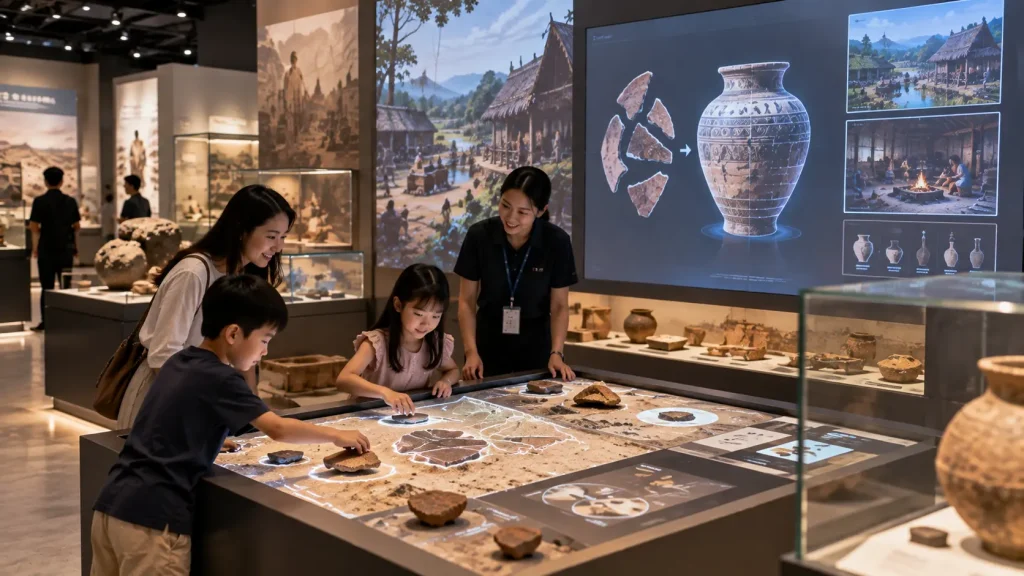
Younger visitors often benefit from experiences that allow them to participate rather than only read or watch.
Interactive museum activities may include:
- Educational quizzes
- Object matching
- Digital puzzles
- Motion-based challenges
- Interactive floor experiences
- Build-and-test activities
- Cause-and-effect simulations
The activity should still support the learning objective.
A game becomes more valuable when visitors learn something through the interaction rather than simply collecting a score.
Can Museum Experiences Support Multiple Languages?
Yes. Digital systems can make multilingual interpretation more flexible than printing every language onto the same physical panel.
A touchscreen, for example, can allow visitors to select a language before exploring the content.
Audio, subtitles and selected interactive experiences can also support multiple languages depending on the project.
This can help keep the physical gallery design cleaner while making deeper information available to a wider audience.
How Should a Museum Visitor Journey Be Planned?
Museum technology should be planned around the visitor journey rather than installed as isolated digital stations.
A simple gallery journey might be:
See the Artefact → Understand the Context → Interact → Explore Deeper → Continue the Story
For example, visitors may first encounter a real historical object, then see a short visual explanation, use an interactive map to explore related locations and finally enter an immersive environment showing the larger historical setting.
Each digital element has a different role, but together they support one story.
How Much Interaction Should a Museum Have?
Not every exhibit needs to be interactive.
If visitors are constantly asked to touch, scan or play something, interaction itself can become distracting.
A museum may instead combine:
- Quiet physical exhibits
- Passive digital storytelling
- Selected interactive exploration
- One or two high-impact immersive experiences
This creates variation in the visitor journey and allows important artefacts to remain the focus where appropriate.
The wider approach is part of immersive experience design, where physical space, content and technology are planned together rather than independently.
Can an Existing Museum Gallery Be Upgraded?
Yes. An immersive museum experience does not always require rebuilding an entire gallery.
Existing spaces can often be upgraded by identifying where digital technology adds the most value while retaining suitable showcases, artefacts, structures and exhibition elements.
For example, an existing gallery may retain its physical collection while adding:
- Interactive interpretation stations
- Digital timelines and archives
- Projection onto selected scenic surfaces
- Interactive maps
- Environmental sound
- A dedicated immersive experience zone
This approach can be particularly useful when a museum wants to modernise the visitor experience without replacing every existing exhibit.
How Can Technology Be Integrated Without Distracting from the Museum?
Technology should support the exhibition design rather than dominate it.
Touchscreens, sensors, speakers and other equipment can be integrated into exhibition furniture, walls or architectural elements so visitors focus on the content instead of the hardware.
For projection-based installations, projector positions should also be planned to minimise visual obstruction and unwanted shadows.
The goal is for visitors to remember the story and collection, not simply the equipment used to present them.
What About Conservation and Sensitive Artefacts?
Digital installations around original museum collections need to consider conservation requirements.
Depending on the artefact and exhibition environment, factors may include:
- Light exposure
- Heat
- Equipment proximity
- Visitor distance
- Physical vibration
- Installation access
Projection should not automatically be directed onto original artefacts. In many cases, digital content can instead be placed on surrounding walls, replicas, models or dedicated projection surfaces.
Technical planning should therefore be coordinated with the museum, curator, exhibition designer and relevant conservation requirements before installation.
Accessibility in an Interactive Museum
An interactive museum experience should consider visitors with different physical, sensory and digital abilities.
Depending on the project, accessibility considerations may include:
- Suitable touchscreen heights
- Clear navigation and large interface controls
- Readable visual contrast
- Subtitles for video and narration
- Alternative methods of accessing information
- Sufficient wheelchair circulation
- Experiences that do not rely entirely on fast physical movement
Not every visitor will interact with technology in the same way, so important information should not become inaccessible simply because someone cannot complete a particular gesture or game.
Can Museum Content Be Updated Later?
Yes. One advantage of digital interpretation is that selected content can be updated without replacing the entire physical exhibit.
A permanent museum system can be designed so authorised staff or technical teams can update selected:
- Images
- Videos
- Descriptions
- Languages
- Interactive content
- Temporary exhibition material
The level of content management should be defined during development. A simple media update requires a different system from an interactive application containing complex animations, databases or real-time logic.
Can Museum Systems Operate Offline?
Yes. Many permanent museum installations can be designed to operate locally without depending on continuous internet access.
Touchscreen applications, interactive maps, projection content and sensor-based experiences can run from local computers or playback systems when the project does not require live online information.
This can improve reliability and reduce dependence on venue connectivity.
Internet access may still be required for cloud-based content, remote services, analytics or other external integrations.
How Reliable Should a Permanent Museum Installation Be?
A permanent museum system has different requirements from technology installed for a short event.
The equipment may operate for many hours each day and be used repeatedly by large numbers of visitors.
The system should therefore consider:
- Commercial-grade hardware where appropriate
- Simple startup and shutdown procedures
- Equipment ventilation
- Secure mounting
- Protected cable routes
- Maintenance access
- Replaceable components
- Recovery after power interruption
Interactive interfaces should also be designed for repeated public use rather than only for a controlled demonstration.
Maintenance and Technical Support
Maintenance requirements depend on the technologies installed.
For example, projection systems may require periodic alignment or equipment inspection, while touchscreen installations need reliable computers, displays and accessible service compartments.
Sensors should remain securely positioned because changes to their angle or environment can affect tracking performance.
For larger permanent installations, documenting the hardware, software, network configuration and startup procedures can make future maintenance easier.
How Should Museum Technology Be Hidden?
Permanent installations benefit from planning technical access before exhibition fabrication begins.
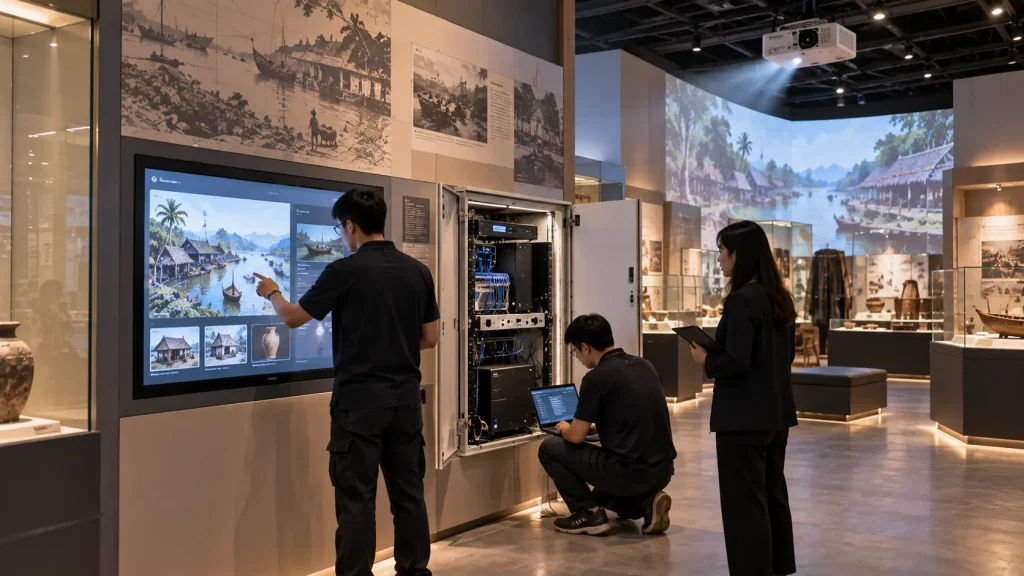
Computers, media servers, network equipment and power distribution can be placed inside ventilated technical compartments or dedicated equipment areas.
Cables can be routed through exhibition structures, raised floors, ceilings or other approved pathways.
At the same time, equipment should not be hidden so completely that routine servicing requires dismantling the exhibition.
A successful permanent installation balances:
Clean Visitor Experience + Safe Equipment Integration + Practical Maintenance Access
How Much Does an Immersive Museum Experience Cost in Malaysia?
There is no single standard price because museum projects vary significantly in scale and complexity.
Major cost factors can include:
- Number of galleries or experience zones
- Interactive touchscreen systems
- Projection equipment
- Immersive room requirements
- Sensors and tracking technology
- Custom software development
- Interactive maps and databases
- 2D and 3D content production
- Audio systems
- Physical exhibit integration
- Exhibition fabrication
- Installation and testing
- Long-term support requirements
A museum does not need to make every gallery immersive at the same time.
The project can be divided into priority zones so investment is concentrated where digital interpretation creates the greatest visitor value.
For broader budget planning, see our Immersive Experience Cost Malaysia guide.
How Can a Museum Control the Budget?
A practical approach is to separate the museum into different levels of digital experience.
| Zone | Possible Approach |
|---|---|
| Core Collection | Physical artefacts with simple digital interpretation |
| Exploration Zone | Touchscreens, interactive maps or digital archives |
| Feature Experience | One high-impact immersive or interactive installation |
| Education Zone | Interactive learning activities or games |
This creates variation throughout the museum without requiring expensive technology at every visitor touchpoint.
Immersive Museum Project Process
A typical museum technology project can follow these stages:
- Collection & Story Review – Understand the artefacts, content and key messages.
- Visitor Journey – Plan how visitors move through and understand the story.
- Experience Concept – Identify where physical, digital and immersive elements should be used.
- Spatial & Technical Planning – Coordinate technology with architecture and exhibition design.
- Content & Software Development – Produce visual content and interactive applications.
- Fabrication & Integration – Integrate equipment with physical exhibition elements.
- Installation & Testing – Install and test the complete experience in the actual environment.
- Training & Handover – Prepare the museum team for daily operation where required.
For larger museum projects, early coordination between the museum, curator, exhibition designer, architect, content team and technology integrator can reduce costly changes later in the project.
What Information Is Needed for a Museum Proposal?
Useful information for an initial proposal includes:
- Museum or gallery objective
- Floor plan and available dimensions
- Existing or planned exhibition design
- Artefacts and content to be presented
- Target audience
- Expected visitor volume
- Required languages
- Preferred interactive or immersive experiences
- Existing digital assets
- Permanent or temporary requirement
- Project timeline
- Estimated budget range
If the exhibition design is still at an early stage, technology planning can begin from the visitor journey before individual systems are selected.
Why MyDigital Asia?
MyDigital Asia develops interactive and immersive experiences that connect physical exhibits, digital content and technology into one visitor journey.
Depending on the museum project, our scope can include:
- Experience concept and visitor journey planning
- Interactive touchscreen applications
- Interactive maps and timelines
- Digital archives and media exploration
- Projection mapping
- Immersive rooms
- Interactive walls and floors
- Motion tracking and sensors
- Educational interactive experiences
- 2D and 3D animation
- Physical exhibit integration
- System installation and testing
The goal is to select technology according to the story and visitor experience rather than adding digital systems simply because they are available.
Frequently Asked Questions
Can immersive technology be added to an existing museum?
Yes. Existing galleries can often be upgraded selectively without rebuilding the entire museum. The suitable approach depends on the current exhibition design, collection and technical conditions.
Do original artefacts need to be projected onto?
No. Projection can be placed on surrounding surfaces, replicas or scenic structures while the original artefact remains protected. Conservation requirements should guide the final design.
Can museum touchscreens support multiple languages?
Yes. Digital interfaces can provide language selection so deeper information is available without placing every translation on physical wall panels.
Can the museum operate the system without a technician every day?
Many permanent systems can be designed with simplified or automated daily operation. The exact workflow depends on the complexity of the installation.
Can content be updated after the museum opens?
Yes. Selected digital content can be designed for future updates, although the update method should be planned according to the type of software and content involved.
Does every gallery need interactive technology?
No. A stronger visitor experience often combines traditional exhibits, passive digital storytelling and selected interactive or immersive highlights rather than making every exhibit interactive.
Create an Immersive Museum Experience in Malaysia
A successful immersive museum does not begin with choosing a projector, touchscreen or sensor.
It begins with the collection, the story and what visitors should understand.
Technology can then provide context, encourage exploration and make complex information easier to experience while allowing physical artefacts to remain central to the museum.
MyDigital Asia can support museum and cultural projects from experience concept and interactive content through software development, projection, system integration and permanent installation.
Contact MyDigital Asia with your gallery layout, collection, project objective and timeline to discuss a suitable immersive museum experience.
Related Immersive Experience Guides
- Immersive Experience Malaysia
- Immersive Room Malaysia
- Immersive Exhibition Malaysia
- Interactive Experience Centre Malaysia
- Immersive Experience for Visitor Centres
- Immersive Brand Experience Malaysia
- Immersive Technology for Events
- Immersive Experience Cost Malaysia
- How to Design an Immersive Experience
Request a Free Consultation
Looking for Interactive Maps, Interactive Solutions or Event Technology?

LATEST POSTS