
Introduction
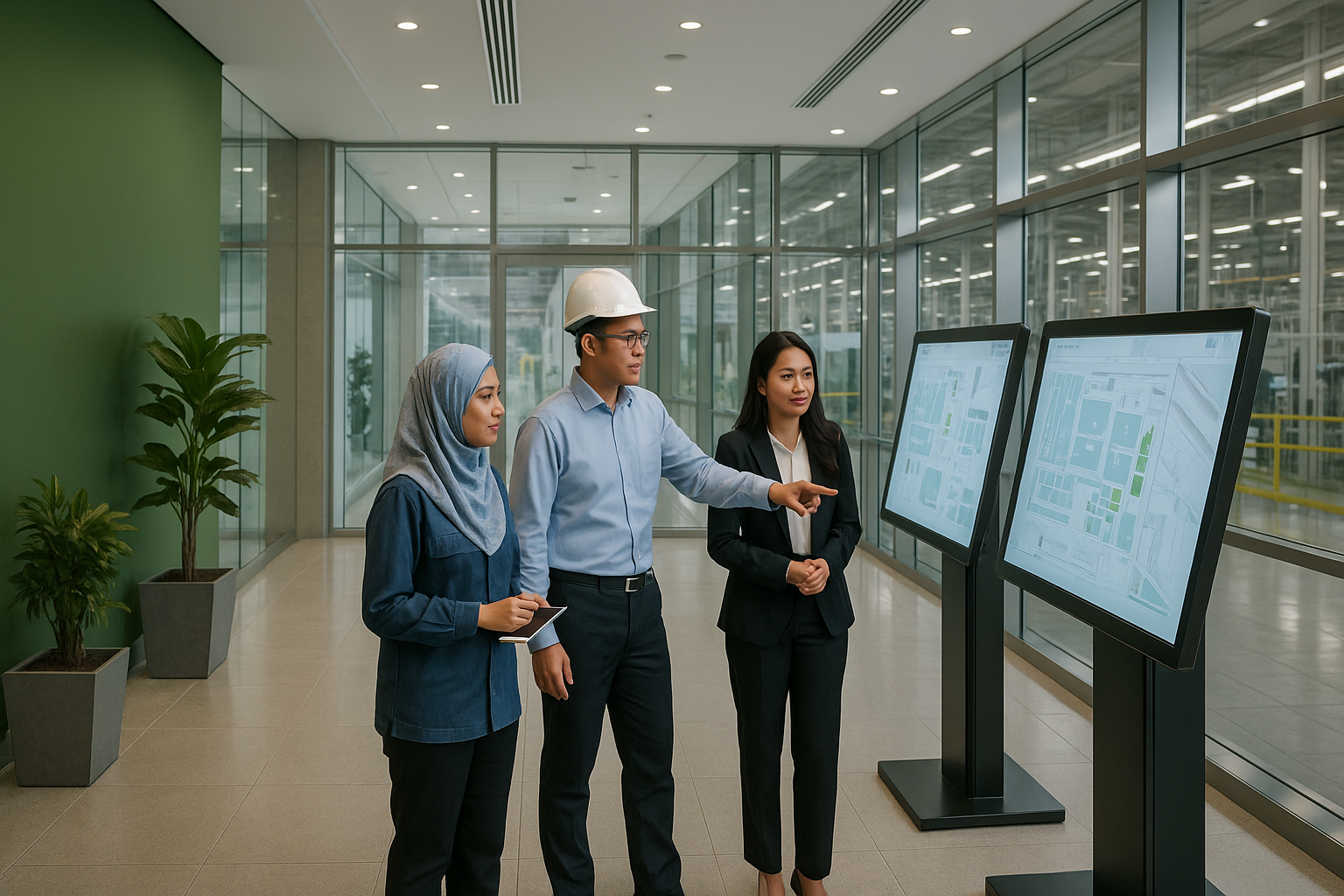
An interactive factory map helps manufacturers in Malaysia turn complex facilities into clear, searchable and actionable digital environments. Instead of relying only on static floor plans, printed signage or verbal directions, teams can use touchscreen systems to locate production lines, safety zones, meeting rooms, warehouses, utilities and visitor routes with greater confidence.
For factories in Selangor, Penang, Johor, Negeri Sembilan and other industrial regions, digital navigation is becoming part of broader smart manufacturing transformation. It supports daily operations, improves facility communication and creates a more professional experience for visitors, auditors, contractors and employees.
MyDigital Asia Sdn Bhd develops interactive digital solutions for Malaysian organisations that need practical, visually engaging and business-ready systems. For manufacturing facilities, the goal is not simply to display a nice map. The goal is to make facility information easier to understand, update and use.
A well-designed factory mapping system can connect spatial information with operational priorities. It can highlight safe walkways, emergency assembly points, restricted areas, machine zones, maintenance rooms and logistics flow. This makes it valuable for both front-of-house visitor guidance and back-of-house operational support.
interactive factory map Applications
A practical interactive factory map can be used in many areas of a manufacturing site, from the main reception lobby to internal security checkpoints and production administration offices. The application depends on the size of the facility, the number of users and the type of information that must be displayed.
- Visitor navigation: Guide guests from reception to meeting rooms, briefing areas, product galleries, training centres or observation decks.
- Safety orientation: Show emergency exits, fire extinguishers, first aid rooms, evacuation routes and assembly points during induction sessions.
- Production zone overview: Present key departments such as assembly, packaging, storage, quality control, maintenance and loading bays.
- Contractor guidance: Help vendors and service providers understand approved access routes and restricted zones before work begins.
- Management presentation: Use large touchscreens to explain plant layout, process flow and expansion plans to stakeholders.
- Training support: Help new employees understand the site faster, especially in large or multi-building facilities.
In Malaysia, factories often host customers, agencies, certification bodies and regional management teams. A digital map improves first impressions by showing that the facility is organised, modern and serious about safety. It can also reduce dependence on staff escorts for simple wayfinding questions.
For companies planning a broader digital experience, MyDigital Asia Sdn Bhd also provides interactive map solutions at https://mydigital.asia/interactive-map/. This can be useful when a factory map is part of a visitor centre, smart showroom, command centre or corporate experience zone.
interactive factory map Benefits
The main value of an interactive factory map is clarity. Manufacturing sites are often dense environments with equipment, restricted rooms, multiple entrances and changing layouts. A digital touchscreen interface makes the facility easier to understand without overwhelming users with technical drawings.
One major benefit is improved safety communication. When staff and visitors can clearly identify emergency routes and controlled areas, the site reduces confusion during normal movement and critical incidents. This is especially useful for orientation programmes and routine safety briefings.
Another benefit is operational efficiency. Reception teams, security personnel, human resources and operations departments often answer repetitive location-related questions. A central digital map reduces these interruptions and allows staff to focus on higher-value work.
For brand image, a factory mapping system presents the organisation as technologically progressive. This matters when hosting customers, investors, headquarters teams or government-related visits. A strong digital experience can support trust, especially for manufacturers involved in export, electronics, automotive, medical devices, food production or precision engineering.
The system can also support better internal communication. When layouts change, digital content can be updated more efficiently than printed boards. New departments, relocated lines or revised visitor routes can be reflected in the interface without reprinting large signage panels.
For Industry 4.0 context in Malaysia, the Ministry of Investment, Trade and Industry provides national policy information at https://www.miti.gov.my. While a digital map is only one component, it supports the wider shift toward smarter, more connected and better-managed industrial environments.
Implementation
Before building an interactive factory map, the project should begin with a clear objective. Some factories need visitor navigation, while others need safety communication, department presentation or a premium customer experience. Defining the primary purpose helps determine content depth and system design.
The next consideration is map accuracy. Floor plans, site drawings and operational zones should be reviewed with facilities, safety, security and production teams. Sensitive information must be filtered carefully, especially if the system is placed in a public reception or customer-facing area.
Hardware selection is also important. A lobby may use a large wall-mounted touchscreen, while a security post may require a compact display. Premium factories may combine a touchscreen with an interactive wall, factory timeline, product showcase or smart showroom experience.
User interface design should be simple. Factory visitors may not be familiar with technical layouts, so the map should use clear categories, intuitive buttons and logical navigation. Complex engineering drawings should be converted into human-friendly visual layers.
Content management is another key factor. A good system should allow authorised teams to update selected labels, points of interest, department names or safety information. This is important because manufacturing environments change over time.
Integration may also be considered. Depending on requirements, a map can connect with visitor management workflows, briefing content, QR codes, digital signage or corporate presentations. However, integration should be planned based on real business needs rather than unnecessary complexity.
Cybersecurity and access control are equally relevant. If the system contains internal operational data, permissions should be defined. Public users should only see suitable information, while internal users may access more detailed layers.
MyDigital Asia Sdn Bhd works with companies to plan interactive systems that fit the physical environment, brand identity and user journey. For enquiries or project discussions, visit https://mydigital.asia/contact/.
FAQ
Question 1?
What information can be included in a factory map?
An interactive factory map usually includes entrances, reception areas, production zones, warehouses, meeting rooms, safety points, emergency exits and visitor routes. The final content depends on security policy and operational needs.
Question 2?
Is this suitable for existing factories?
Yes. Existing manufacturing facilities can adopt a digital map by converting approved floor plans into a simplified touchscreen interface. It does not require a new building, although updated drawings and site verification are recommended.
Question 3?
Can the map be used for safety briefings?
Yes. Many factories use digital maps to support induction, contractor briefings and visitor orientation. It can help explain evacuation routes, restricted areas, personal protective equipment zones and assembly points more clearly.
Question 4?
How long does implementation take?
Timeline depends on facility size, content complexity, design requirements, hardware availability and approval cycles. A simple reception-based map may be completed faster than a multi-building system with advanced content layers.
Conclusion
An interactive factory map gives Malaysian manufacturers a practical way to improve navigation, safety communication, visitor experience and facility presentation. It helps turn complex factory layouts into clear digital journeys that people can understand quickly.
For companies investing in smart facilities, the right system should balance design quality, accurate information, secure content and simple usability. With proper planning, it becomes more than a digital floor plan. It becomes a professional tool that supports operations, branding and future growth.
Request a Free Consultation
Looking for Interactive Maps, Interactive Solutions or Event Technology?

LATEST POSTS